Report: Macron's pledges at the Nairobi summit are insufficient
Macron's pledges at the Kenya summit
Written by Ziad Abdel Fattah:
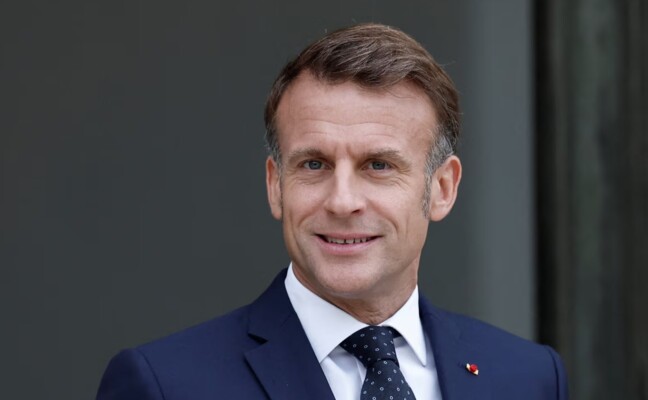
Meanwhile, French President Emmanuel Macron announced new investments worth $27 billion at the summit. France Africa in Nairobi this week, US reports said his pledges are not enough to meet the needs of a debt-ridden continent.
According to Reuters, the president's pledges, during a run with Kenyan marathon star Eliud Kipchoge and a talk with local university students, to support Africa's debt-laden economies and push for reform of the international financial system by introducing a first-loss guarantee mechanism, were not enough to meet needs such as debt relief and payment deferrals, analysts said.
The term “First Loss Guarantee” is a means of reducing risk and encouraging investors to enter “high-risk” projects or markets (such as emerging economies in Africa). It is a mechanism in which one party bears the initial losses in the investment, with the aim of making projects more attractive to private sector investors.
The risk guarantee mechanism is part of a broader effort to mobilize capital as wealthy governments shift spending from development finance to defense and other domestic priorities.
France could have made new commitments

According to a Reuters report, “There is a wide range of new commitments that France could have made that would have helped change the international financial architecture… But those that France has chosen, even if credible… will simply maintain the structure as it is.”.
“We need to make the international development finance system work better, ensure it is better coordinated, and reduce its complexity for recipient countries,” a French finance ministry official said in Paris on Wednesday.
“Countries and international financial institutions can guarantee loans obtained by poorer or developing countries to finance projects.”
Calls for debt relief
African leaders, such as Kenyan William Ruto, who co-chaired the summit with Macron, called for a review of credit rating methodologies to lower borrowing costs, arguing that the risks facing Africa are exaggerated. Major credit rating agencies rejected these criticisms.
Other African proposals include easing the debt burden on poor countries, while a panel of African experts formed by South Africa last year urged rich countries and international financial institutions to create a debt refinancing mechanism.
Macron, who holds the presidency of the G7, invited Rutte to attend its summit next month where risk assurance mechanisms will be discussed.
Activists insist that this will not be enough, and that France must use its considerable political influence on international sovereign debt issues to call for the cancellation of debts for countries of the Global South that request it, according to a joint statement from six civil society organizations, including the African Forum, the Debt and Development Network (Afrodad), and Oxfam France.
Paris presented the summit – the first to be held in a non-French-speaking country – as evidence of renewed engagement with Africa following tensions with some former colonies in West Africa.
More than 30 African leaders attended, along with African and French businesspeople.
While France is trying to market itself as a more equal and respected partner, the summit also reflected a broader effort by a former colonial power to remain economically and politically relevant on the continent, according to Gervin Naidoo, a political analyst at Oxford Economics.