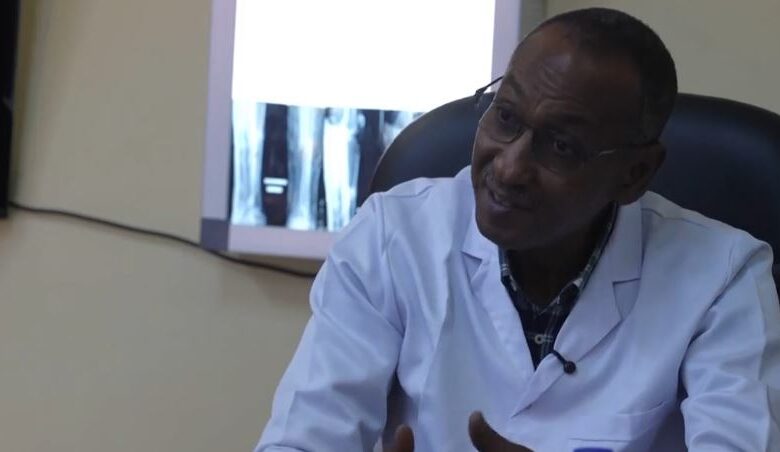
A Sudanese doctor faces death daily to give life to others.
Sudanese doctor Jamal Al-Tayeb
Written by: Qusay Ahmed
Over three years, the doctor faced SudanJamal Al-Tayeb faced tough and painful choices amid a raging war in Sudan, as the commander of a hospital in Omdurman, on the outskirts of the capital Khartoum, at a time when control of the city was swinging between the Sudanese army and the Rapid Support Forces.
Sudan's health system is on the verge of collapse
The Sudanese doctor recounted his ordeal in the war-torn Sudanese hospital, saying he was forced to choose between staying to care for patients and help others who needed his skills as a surgeon, and choosing his own personal safety.
According to the Associated Press, Al-Tayeb is one of countless Sudanese who have stepped forward to offer assistance, at a time when the world is preoccupied with other conflicts in the Middle East and Ukraine.
He adds that he has personally witnessed the effects of the war behind the tens of thousands of victims, and has seen daily what the United Nations' warning about the impending collapse of his country's health system means.
It is estimated that approximately 401,000 hospitals in Sudan are out of service, having been looted or used as bases by armed groups. Despite the Sudanese army regaining control of the capital, Al-Naw Hospital remains one of the few functioning health centers in the region.
Operations on the hospital grounds
During a tour of the hospital, Al-Tayeb, 54, showed the agency's journalists the remains of the most difficult months of his life, pointing to a window hit by shelling that killed a relative of a patient, and to a courtyard where only one of the dozens of tents that were erected at the height of the fighting to accommodate the large numbers of wounded remained.
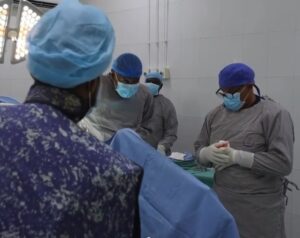
He added: “We were working everywhere; in tents, outside, and on the ground… doing everything we could to save patients” lives.”.
Al-Tayeb gained international recognition by receiving the $1 million Aurora Prize for Awakening Humanity, awarded to those who risk their lives to save others. He donated part of the prize money to medical and humanitarian organizations around the world.
He added that he and a small number of employees and volunteers faced enormous difficulties in keeping it running, given the power outages that lasted for weeks and the reliance on the army to provide fuel for the generators, in addition to the depletion of essential medicines such as antibiotics and painkillers.
He added: “From that moment, we realized we were a target… and the targeting didn’t stop there.” He noted that the Rapid Support Forces bombed the hospital three more times later.
And that one day in late 2024, he and his team had to sort through more than 100 injured people after a nearby market was bombed, eight of whom died.
On another, more difficult day, he was forced to make the decision to amputate children's limbs without full anesthesia, due to severe bleeding and the lack of time to transport them to the operating room, he said.
Al-Tayeb explained that the current funding is sufficient until June to cover salaries and run the generators, but the hospital needs about $40,000 a month to continue operating.
Although some countries have pledged to support the reconstruction of Sudan, regional developments raise concerns about diverting attention and resources away from the country.