Written by: Omnia Hassan
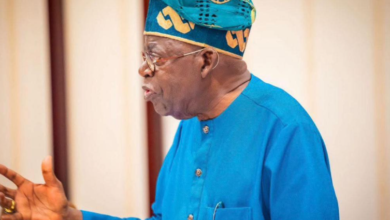
Niger's President, General Abdourahmane Tiéné, sparked widespread controversy after directly accusing Mauritania, Benin, and Ivory Coast of complicity in the armed attacks that struck Mali on April 25, 2016, and which were claimed by the Group for the Support of Islam and Muslims (GSIM) and the National Movement for the Liberation of Azawad (MNLA). Tiéné's remarks came during a lengthy televised interview broadcast on state television to mark three years since the military junta seized power following the overthrow of civilian President Mohamed Bazoum.
3 axes of armed attacks
Tiani explained that the coordinated attacks on Malian territory were launched along three main axes. He said the first axis originated in northern Benin, with three columns moving towards the cities of Gao and Sévaré. The second axis, he indicated, originated in Ivory Coast, where he claimed Ukrainian elements were training what he called "mercenaries" in a forest, adding that these mercenaries had received training there before carrying out the operations.

He added that the third axis came from Mauritania, without providing further details regarding the nature of the movements or the evidence on which he based his accusations.
France under fire
The Nigerien president linked the three countries to the French presence, arguing that the French forces and interests present in them are behind organizing the operations targeting Mali, Niger and Burkina Faso, whether with or without the knowledge of the authorities of those countries.
He also questioned Paris's announcement of reducing its military presence in Ivory Coast, claiming that French experts supervised, last March, the training of groups on the use of suicide drones, which he said were later used to target sites within the Sahel alliance countries.
A fierce attack on Macron
Tiani escalated his rhetoric against France and President Emmanuel Macron, describing the latter as “crazy” and asserting that Paris acts only in its own self-interest. He quoted a saying attributed to former French President Charles de Gaulle: “France has no friends, only interests,” in reference to what he perceived as the continuation of French influence in the Sahel region.
Background of the attacks in Mali
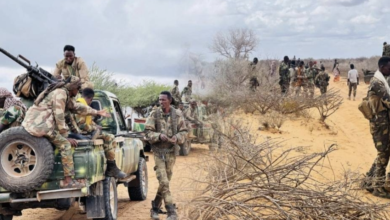
On April 25, 2026, Mali was subjected to a series of simultaneous attacks targeting the cities of Bamako, Kati, Konna, Mopti, Sévaré, Kidal and Gao, resulting in the death of Malian Defense Minister Sadio Camara and a number of soldiers, in one of the most violent attacks the country has witnessed in recent years, which brought the issue of security in the Sahel region back to the forefront of regional and international attention.