Bill Gates urges Africa to invest in people, digital infrastructure and innovation
Investing in people and technology
Written by Ziad Abdel Fattah:
The renowned businessman Bill Gates, head of the Gates Foundation, said that African leaders There is a need to prioritize investment in people, digital infrastructure and innovation, as development aid declines and governments face increasing financial pressures.
The Organisation for Economic Co-operation and Development (OECD) reported a decline in development aid for the second consecutive year in 2025, as donor countries redirected their spending towards defense and domestic priorities. The European Network on Debt and Development says that aid levels have fallen to their lowest point since the COVID-19 pandemic, forcing many African governments to make difficult decisions about their limited resources.
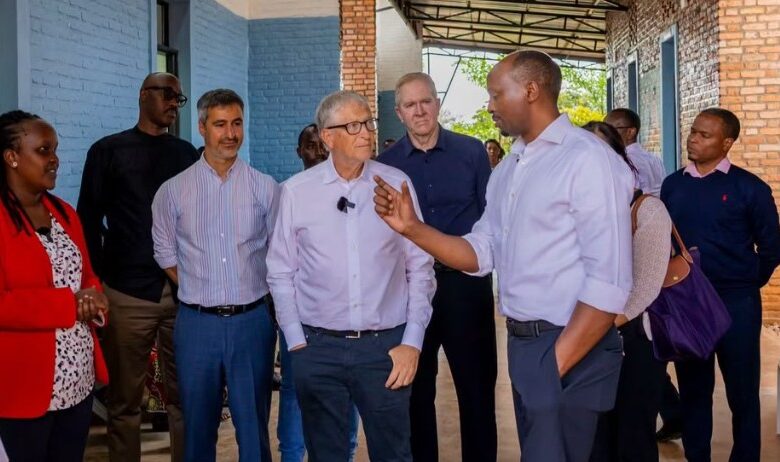
Speaking to CNBC Africa ahead of a visit to Rwanda, the Gates Foundation chairman said the current environment makes it crucial for countries to focus on high-impact investments in health, education and technology.
Gates said: “There is no doubt that this is a difficult moment. Development aid is declining, and governments across the continent are facing tough decisions about how to prioritize their limited resources. But when resources are limited, the priority should be to invest in interventions that we know will deliver the greatest benefit.”
Africa holds the greatest economic opportunities of this century.
Gates believes that Africa’s greatest opportunity lies in its people, and by 2040 the continent is expected to have the largest working-age population in the world, creating what he describes as one of the greatest economic opportunities of this century.
He said: “Africa’s greatest asset is its youth. If countries continue to invest in health, education and innovation, this demographic shift could become one of the greatest economic opportunities of this century.”.
It refers to a new generation of African entrepreneurs who are building companies in artificial intelligence, financial technology, healthcare and creative industries, many of which are already competing on the global stage.
The rapid progress in artificial intelligence, which he describes as the most important technological achievement of his life, is a key element of Gates' optimism.
Artificial intelligence is the greatest technological advancement of our time.
He said: “Artificial intelligence is the greatest technological advance of our time, and it has the potential to help solve some of the biggest challenges facing Africa.”.
He believes that Africa is well-positioned to benefit from the current technological transformation, just as it has moved beyond traditional banking systems by adopting mobile money.
Gates said: “Every major technological shift creates new opportunities for people who are ready to build. Africa has already proven this by moving beyond traditional banking through mobile money, and I believe that artificial intelligence, public digital infrastructure, and advances in health and agriculture will create the same opportunity for this generation.”.
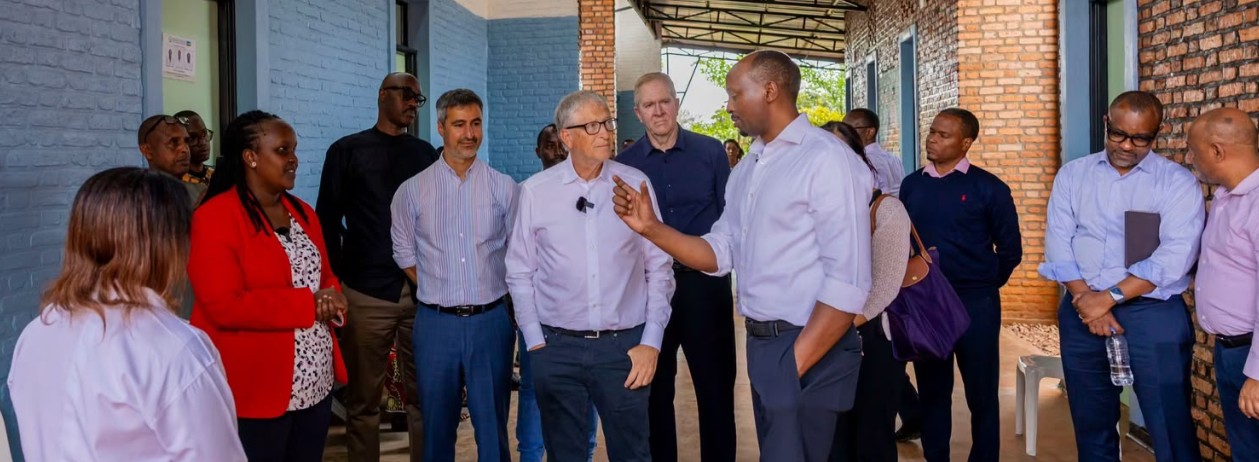
His visit to Rwanda is partly aimed at understanding how long-term investments in individuals and institutions have yielded tangible results. Since 2000, Rwanda has reduced its under-five mortality rate by 801 TP3T and its maternal mortality rate by 851 TP3T, achievements Gates attributes to strong primary healthcare systems, community health workers, and effective public institutions.
He said: “What catches my attention is not one particular innovation, but the way in which the state’s long-term investments in people, strong institutions, and implementation translate into real progress.”.
Digital Public Infrastructure (DPI) is a key element of Bill Gates' vision for Africa's future. He asserts that interoperable digital payment systems, digital identity platforms, and secure data exchange networks can accelerate economic growth by expanding access to financial services and public support programs.
Gates said: “A digital payment system is essential for economic growth. When countries build digital payment systems and secure data exchange systems that work together, it becomes easier for people to start businesses, access financial services, and receive government support.”.
He cited Tanzania’s “M-Mama” program, which uses digital transmission technology to connect pregnant women and newborns with emergency transport services, as an example of technology that is making a tangible social impact. The program has facilitated more than 150,000 emergency journeys and, according to reports, has helped save more than 6,300 lives.
Despite growing concerns about declining aid flows, Gates remains committed to Africa's development. Last year, the Gates Foundation announced plans to invest $200 billion over the next two decades, with the majority of the funding directed toward health and development programs in Africa.
But he stressed that sustainable progress cannot be achieved by relying on aid alone.
Gates said: “Long-term progress will depend on stronger local institutions and leadership. Our role is to support the priorities that African countries have already set for themselves.”.