The last chance... Will free trade succeed in liberating Africa economically?
The free trade agreement relies on manufacturing and increased intra-regional trade.
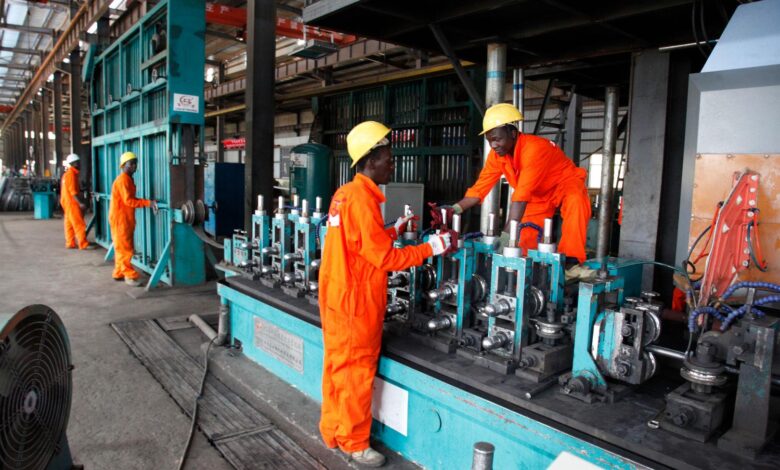
Written by: Mohammed Omran
Despite what she possesses Africa With vast natural resources and a consumer market of more than 1.4 billion people, the continent’s economies still rely heavily on exporting raw materials and importing manufactured goods, making them vulnerable to global market fluctuations and external shocks. A recent report on the trade and investment landscape in Africa revealed that the continent still faces structural challenges that hinder its economic transformation, at a time when hopes are pinned on the Continental Free Trade Agreement to promote economic integration, support manufacturing, and increase intra-African trade.
Will free trade succeed in liberating Africa economically?
The report, which appeared in Volume 10 of the semi-annual publication entitled «The Trade and Investment Landscape in Africa», explained that this trade pattern limits the ability of African countries to achieve high added value and makes them more vulnerable to global economic fluctuations.

The report noted that African exports remain concentrated in agricultural products, oil and gas, and minerals, while manufactured goods and equipment account for the bulk of imports. According to the African Export-Import Bank (Afreximbank), this situation leaves many of the continent's economies vulnerable to external shocks stemming from commodity price volatility, geopolitical tensions, and disruptions to global supply chains.
Global trade indicators support this assessment; Africa's share of global exports did not exceed 2.21 TP3T in 2023, despite the continent having approximately 171 TP3T of the world's population. Furthermore, intra-African trade accounted for only 14.81 TP3T of the continent's total trade, compared to 54.51 TP3T in Asia and 68.41 TP3T in Europe, reflecting the continued weakness of trade integration among African economies.

Continental Free Trade: An Opportunity for Transformation
The report argues that the African Continental Free Trade Area (AfCFTA) is the most important instrument for diversifying the continent's production and trade base, strengthening regional value chains, and supporting intra-African trade. The agreement also aligns with the African Union's Agenda 2063, which aims to promote economic integration, stimulate industrialization, and raise productivity levels.
Trade in Africa: The continent remains hostage to raw material exports
According to the report's estimates, intra-African exports could increase by more than 201 TP3T over the next decade as the agreement's implementation accelerates. Other estimates from the United Nations and the World Bank suggest even greater increases, potentially reaching 811 TP3T by 2035, if the required reforms are fully implemented.
Despite these positive expectations, progress on the ground remains limited; intra-African trade increased from $69 billion to only $81 billion between 2019 and 2023, reflecting the continuing structural challenges facing trade within the continent.
Infrastructure and financing challenges
The report stressed that infrastructure development remains a prerequisite for supporting trade and investment, particularly in the energy, transport, ports, communications and logistics sectors, which contributes to reducing the costs of doing business and improving cross-border trade flows.
He also highlighted the importance of strengthening the regulatory environment, supporting economic institutions, expanding financing opportunities for small and medium-sized enterprises, as well as taking advantage of the rapid growth of digital financial technologies that are playing an increasing role in stimulating local investment.

At the same time, the report noted the continued disparity in foreign direct investment flows within the continent, with East and Southern African countries receiving the largest share of investments compared to West and Central African countries, due to differences in infrastructure levels, governance, and the investment environment.
Growing role of development finance institutions
The report emphasized that regional development finance institutions, foremost among them the African Export-Import Bank, continue to play a pivotal role in supporting intra-regional trade by providing financing and launching trade facilitation initiatives.
Among the most prominent of these initiatives are the African Payments and Settlement System (PAPSS), the African Continental Free Trade Area Adjustment Fund, the Cooperative Transit Guarantee Mechanism, and the Intra-African Trade Fair, which aims to promote trade and investment links within the continent.

The report concluded by emphasizing that Africa has made tangible progress on the path to economic integration, but that there is still a long way to go to achieve the desired structural transformation. It stressed that bridging the financing and infrastructure gaps and improving the competitiveness of African economies will remain crucial factors in unlocking the full potential of trade and investment within the continent in the coming years.