Author Alexandra Kinias: I climbed Kilimanjaro at 60 to prove that age is just a number... and Egyptian women have highlighted more than 20,000 success stories | Interview
Alexandra Kinias charts an exceptional course
Interview by: Mohamed Ragab
From mechanical engineering to screenwriting, from fitness training to climbing Africa's highest peak, writer and women's empowerment activist Alexandra Kinias has charted an extraordinary path that combines passion, challenge, and determination.
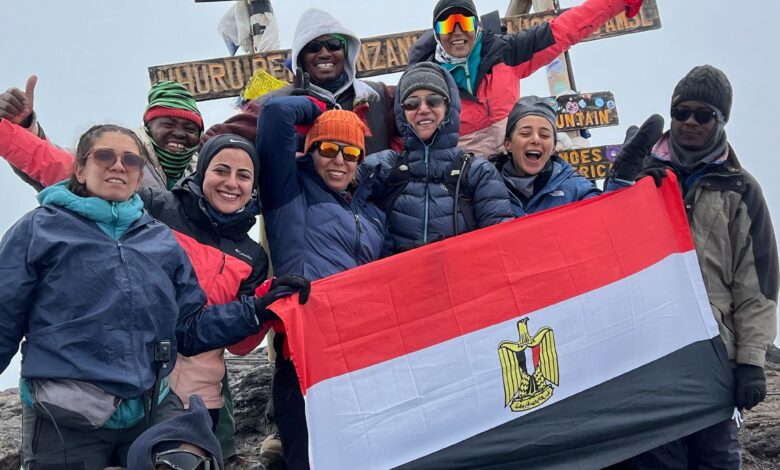
On her sixtieth birthday, she fulfilled a childhood dream by climbing Mount Kilimanjaro in Tanzania, sending a clear message that age should not be an obstacle to achieving dreams.
In this interview with Zoom Africa News, Alexandra Kinias talks about her diverse journey between engineering, writing and travel, her inspiring experience climbing Kilimanjaro, and the psychological and human lessons she learned from this adventure.
It also reveals the behind-the-scenes story of the founding of the “Women of Egypt” initiative, which, over the course of about a decade, has succeeded in highlighting more than 20,000 success stories of Egyptian women, and has contributed to changing the stereotypical image of Egyptian women locally and globally, in addition to its vision for the future of women’s empowerment through travel, adventure and self-discovery.
Here is the text of the dialogue:
You've moved between mechanical engineering, fitness training, screenwriting, and the world of travel; how would you summarize this mix, and which of these fields do you feel expresses your true identity today?
I see all these areas as interconnected in my life in one way or another. Everything I learned was driven either by a desire for understanding and knowledge, or by curiosity, a love of experimentation, and self-learning. Each experience added something new to me and contributed to shaping the person I am today.
I studied mechanical engineering as an academic discipline and career path, and I learned from it how to organize thinking, the methodology of analysis, and how to deal with problems in a logical way similar to solving engineering problems.
My studies in fitness science and obtaining an international training certificate were motivated by my concern for my health, fitness, and diet first and foremost, and my desire to apply what I learn to myself before presenting it to others as a trainer.
My love for films and stories also led me to learn screenwriting, as I was curious to know how films were written. With time and continued study, this interest evolved from screenwriting to writing novels and articles.
My interest in writing about women's issues fueled my passion for supporting and empowering women, and this is where my true connection to this field began. I became an activist for women's rights, and I have written extensively on various women's issues. This was the impetus behind launching the "Women of Egypt" initiative in 2016 to support women, and women's empowerment has become one of my most important concerns and messages.
My love for travel and adventures led me to obtain accredited certificates to work as a travel advisor, not only for the sake of travel, but also to share this passion with others, and to encourage women to discover the world and have new experiences that enrich their lives.
Every step in my life had a purpose, even if it wasn't clear at the beginning. But when I look back on the journey today, I realize that every experience and every decision was part of shaping the person I am today.
Therefore, I don't believe my true identity lies in just one area, but rather in the sum of all these experiences. Everything I've learned and lived through is a piece of a larger picture, and when these pieces come together, they form the complete picture of who I am today.
You have taken some special tours in the African continent; what attracted you to explore Africa specifically, and how did these tours change your view of nature and different cultures?
Unfortunately, I have not had the opportunity to travel to many African countries so far, and my only experience on the continent was traveling to Tanzania to climb Mount Kilimanjaro.
However, I see Africa as a fascinating continent, rich in natural, cultural and human diversity, and I hope that I will have the opportunity in the future to explore more of its countries and get to know its people, cultures and different experiences more closely.
During your African tours and meetings with local people, did you notice any similarities between the challenges and aspirations of women in the heart of Africa and women in Egypt?
I did not have the opportunity to sufficiently learn about the similarities between the challenges facing women in Tanzania and their counterparts in Egypt, but during my visit there were many situations that caught my attention and gave me a positive impression of the presence of women and their role in Tanzanian society.
It was a big surprise to discover that the owner of the travel agency that organized our trip was a woman, and she personally handled all the company's administrative affairs. We also noticed that there were women working as guides and leaders for the Kilimanjaro climbing expeditions, something I hadn't expected given the physical exertion and immense endurance required for such a task.
I was also struck by the large number of women working in traffic police and regulating traffic on the roads, which reflects a clear presence of women in various areas of public life.
What impressed me most about Tanzania was that the head of state is a woman. She was originally the vice president, then assumed leadership of the country after the president's death during the COVID-19 pandemic. And that wasn't all; she later won the election when the transitional presidential term ended.
Even more remarkable was that many of the citizens we spoke with described her as caring and nurturing, treating people with a motherly spirit, which earned her widespread affection and strong public support. Clearly, this sentiment was a major factor in her election victory and continued leadership of the country.
The decision to climb Kilimanjaro: From the heart of these African tours came your most prominent decision to climb Mount Kilimanjaro (the highest peak in Africa); what prompted you to make this difficult decision at this particular time?
I love traveling, walking, hiking, and sports in general.
I believe that each of us has a mountain to climb, and for me, Kilimanjaro was my mountain. The idea of "mountain" here isn't limited to a literal mountain, but rather it symbolizes any challenge we face in life and strive to overcome.
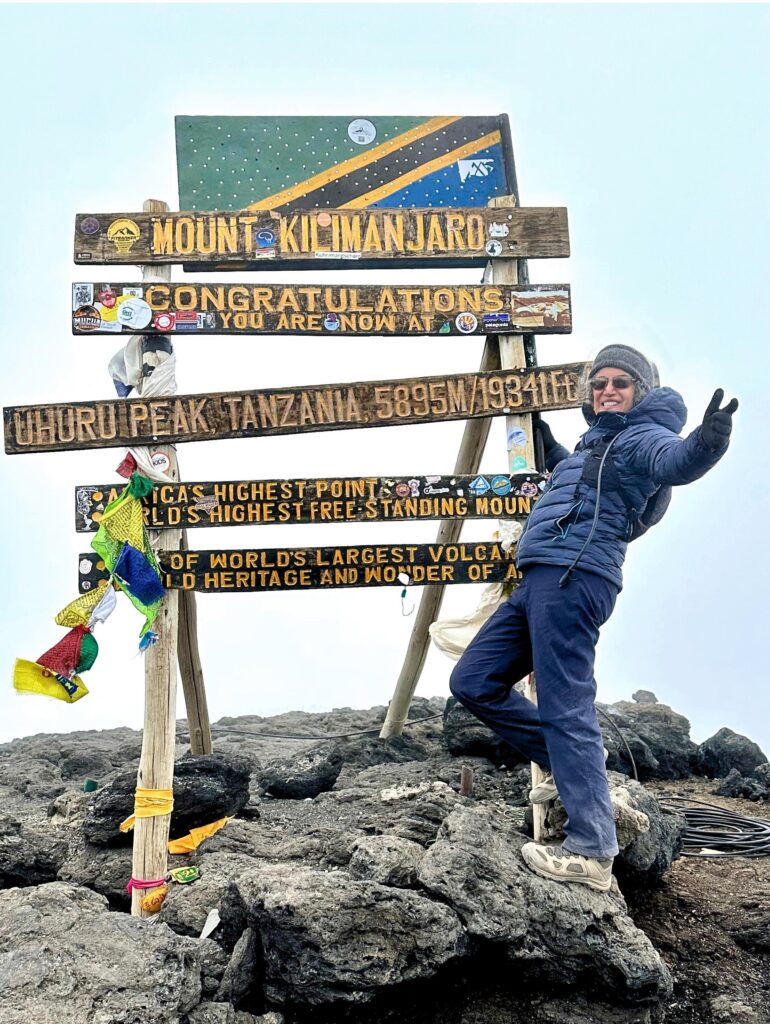
Since I was a child, I dreamed of climbing Kilimanjaro, but life's demands and responsibilities kept postponing this dream year after year. As the years passed, and I approached sixty, I felt the time had come to fulfill this long-held dream.
I specifically wanted to climb Kilimanjaro on my 60th birthday because I wanted to break down the stereotypes associated with age. I wanted to send a message to every woman that age is just a number, and that a person is capable of achieving their dreams and having new experiences at any stage of their life.
In truth, it began as a personal challenge and a celebration of an important milestone in my life. The idea of climbing Kilimanjaro at the age of sixty was not just an item on my dream list, but also a confrontation with that inner voice that sometimes tries to convince us that it is too late or that age no longer allows for adventure or the fulfillment of ambitions.
I wanted to challenge that voice, first and foremost for myself, and for every woman who might hear it. Because age shouldn't be the deciding factor in what we can or can't do. I was looking for a daring experience that would push me out of my comfort zone, and this mountain was exactly the challenge that delivered.
I believe that a person only discovers their true strength when they put themselves in situations that test their mental and physical capabilities. And I wanted to prove to myself, before anyone else, that the spirit of adventure isn't tied to a specific age, and that the passion for life can remain present no matter how old we get.
And perhaps I had another simple and dear motivation; I wanted my grandson to always remember me as the “cool grandma” who never stopped dreaming, never hesitated to embark on adventures and achieve what she believed in.
Moving from the mountain peaks to the peaks of women's success, you founded the "Women of Egypt" page and platform. What was the initial spark that inspired you to launch this huge digital project?
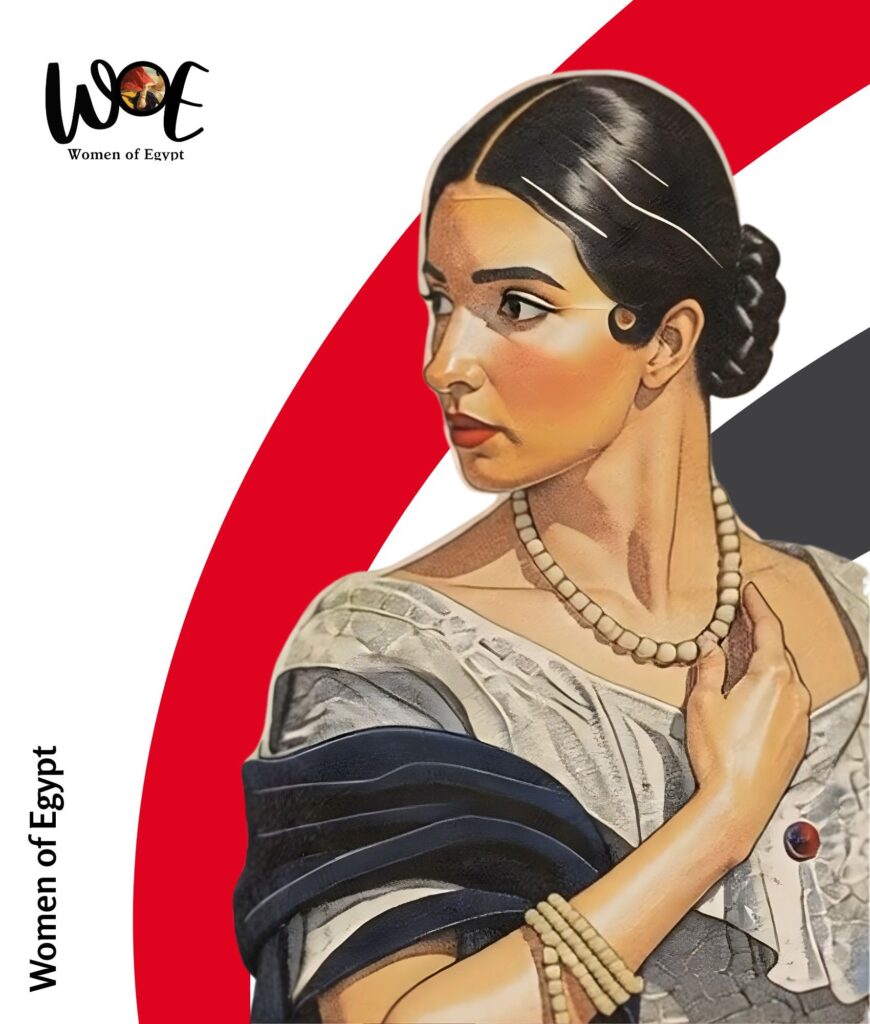
“Women of Egypt” is a social organization that aims to support and empower Egyptian women by highlighting women’s success stories, highlighting the issues and challenges that hinder their progress and development, as well as discussing issues of inequality between women and men, and working to bring about positive changes in society at the social, cultural, economic and professional levels.
The “Women of Egypt” initiative was launched in 2016, coinciding with the swearing-in of 89 female members of the new Egyptian parliament. This event marked a significant milestone in the history of Egyptian women's participation in political life, as the percentage of women in the 2015 parliament reached approximately 14.91%, the highest percentage of female representation in the Egyptian parliament at that time.
With the entry of this large number of female members of parliament, it became clear that a new phase had begun for the status of Egyptian women and their role in public life. This came after years marked by numerous challenges that impacted women's gains, particularly in the period following the 2011 revolution.
At that stage, several proposals were put forward that raised widespread concerns about women's rights, including calls to abolish the khul' law (a form of divorce initiated by the wife), to repeal laws criminalizing female genital mutilation, and to lower the minimum age of marriage for girls. However, these proposals were never implemented, as Parliament was dissolved before they could be passed.
With the transformations Egypt witnessed after 2013, women's issues and rights regained greater attention and support. This led to the establishment of "Women of Egypt," stemming from a belief in the importance of continuing to support Egyptian women, highlighting their issues, and enhancing their participation in various fields.
It is important to emphasize that the organization is registered and operates under the name “Women of Egypt,” and has no connection whatsoever with any other pages, platforms, or initiatives bearing similar names such as “Women of Egypt,” “Women from Egypt,” “Your Women, Egypt,” or any other such names. ”Women of Egypt” is an independent entity with its own identity, mission, and objectives since its founding in 2016.
You described the Kilimanjaro climb as the most challenging experience for your physical and mental strength; what was the moment when you felt fear or extreme fatigue, and how did you overcome it to continue the climb?
In truth, I didn't feel afraid at any point during the trip. Mount Kilimanjaro is a fairly safe place, but what I can say with certainty is that it was an extremely exhausting experience, both physically and mentally.
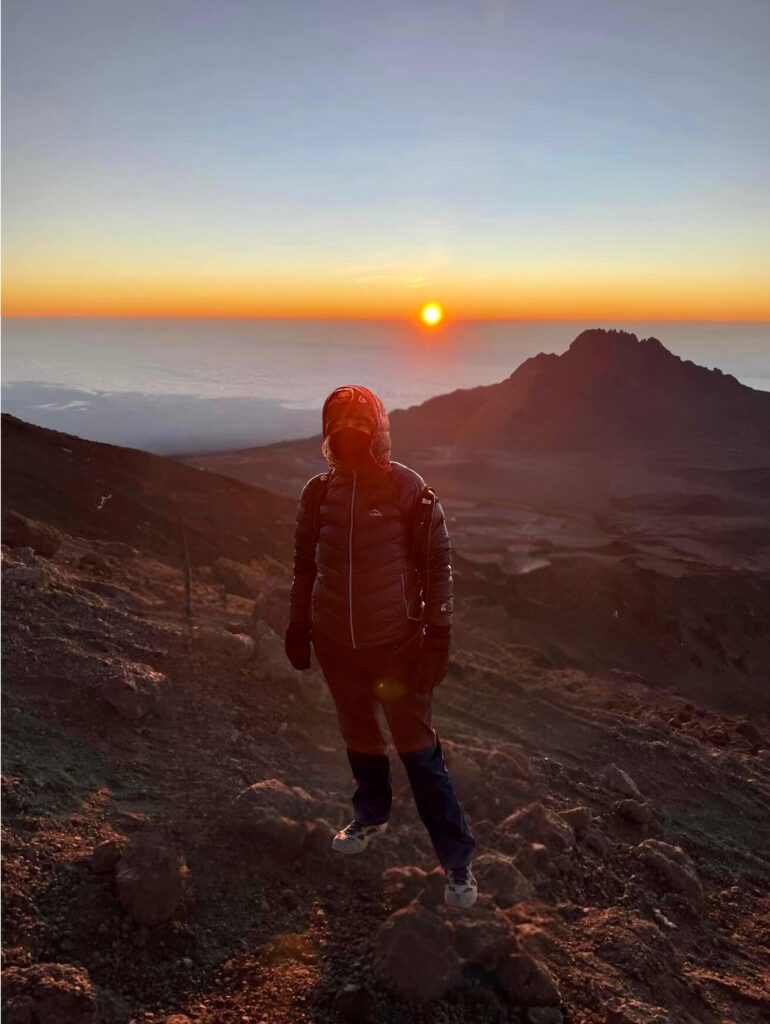
After experiencing it firsthand, I realized that climbing Kilimanjaro requires more than just physical fitness; the mental strength needed to face this challenge is no less important than physical strength, and may even surpass it at times.
The night before the summit was the most difficult of all. We left camp at 3:30 a.m. and didn't reach the summit until 1:00 p.m., according to the time on our climb completion certificate. This meant we had been hiking for almost ten hours straight in strong headwinds that battered our faces the entire way.
The adventure took eight full days; seven days to reach the summit and a day and a half to descend. During those days, I felt a certain awe, not from fear of the mountain itself, but because I was the oldest and least physically fit among the group, which included professional marathon runners and experienced mountaineers. Therefore, I constantly felt I had to exert extra effort to maintain my pace and keep going.
On the last night, it wasn't just anxiety that gripped us all, but exhaustion as well. The higher we climbed, the more tired we became due to the lack of oxygen. Even talking was exhausting, because every word consumed an extra amount of energy and oxygen, both of which were constantly in short supply. And with increasing altitude, the wind grew stronger and colder.
Climbing Kilimanjaro is not just a physical challenge, but an equally significant mental one. You spend long days completely outside your comfort zone; you experience constant exhaustion, difficult hygiene conditions, loss of appetite, and not showering for more than a week, in addition to the bitter cold, lack of sleep, and oxygen deprivation. Often, every step felt like a full marathon, and after about every ten steps, I would feel breathless and need to stop to recharge.
Furthermore, you spend long periods in constant motion across different climatic zones, facing harsh and ever-changing weather conditions. No amount of prior training can fully prepare a person for the experience of altitude sickness and its physical and psychological effects.
I admit that climbing Kilimanjaro was much harder than I expected, but at the same time it was more challenging and inspiring than I imagined. However, the idea of giving up was never even on my mind.
On the final night of the ascent, the weather was extremely harsh. Visibility was almost zero due to the thick cloud cover, the wind was so fierce it pushed us along the way, and we encountered a blizzard. We were fortunate to reach the summit before the storm intensified, which forced the closure of the peak the following day and prevented many climbers from reaching it.
Despite all these circumstances, the thought of giving up never crossed my mind. Even when I considered myself the weakest member of the group in terms of physical fitness, I felt a strong inner determination to continue. During that journey, I realized that one only truly knows the extent of one's strength when faced with a real test. And the truth is, I was surprised by my own personal strength.
I faced the challenge head-on, without hesitation or retreat. I came to Kilimanjaro with only one goal: to reach the summit. No matter how exhausted or tired I became, I never considered giving up for a single moment.
I walked slowly, breathing heavily, and there was always a distance separating me from the rest of the group, who were faster and more agile. Nevertheless, I had complete faith that I would eventually reach the finish line, step by step, no matter how long or difficult the journey.
I had imagined myself standing at the top hundreds of times before I actually reached it, as if I had lived that moment in my mind before it actually happened. Perhaps this mental imagery was part of the strength that drove me to keep going. It's true that the speed and fitness level of my teammates sometimes intimidated me, but I refused to let that feeling discourage me or distract me.
I believe this was one of the most important lessons of the trip: that psychological preparation and belief in the goal can sometimes be stronger than any physical preparation.
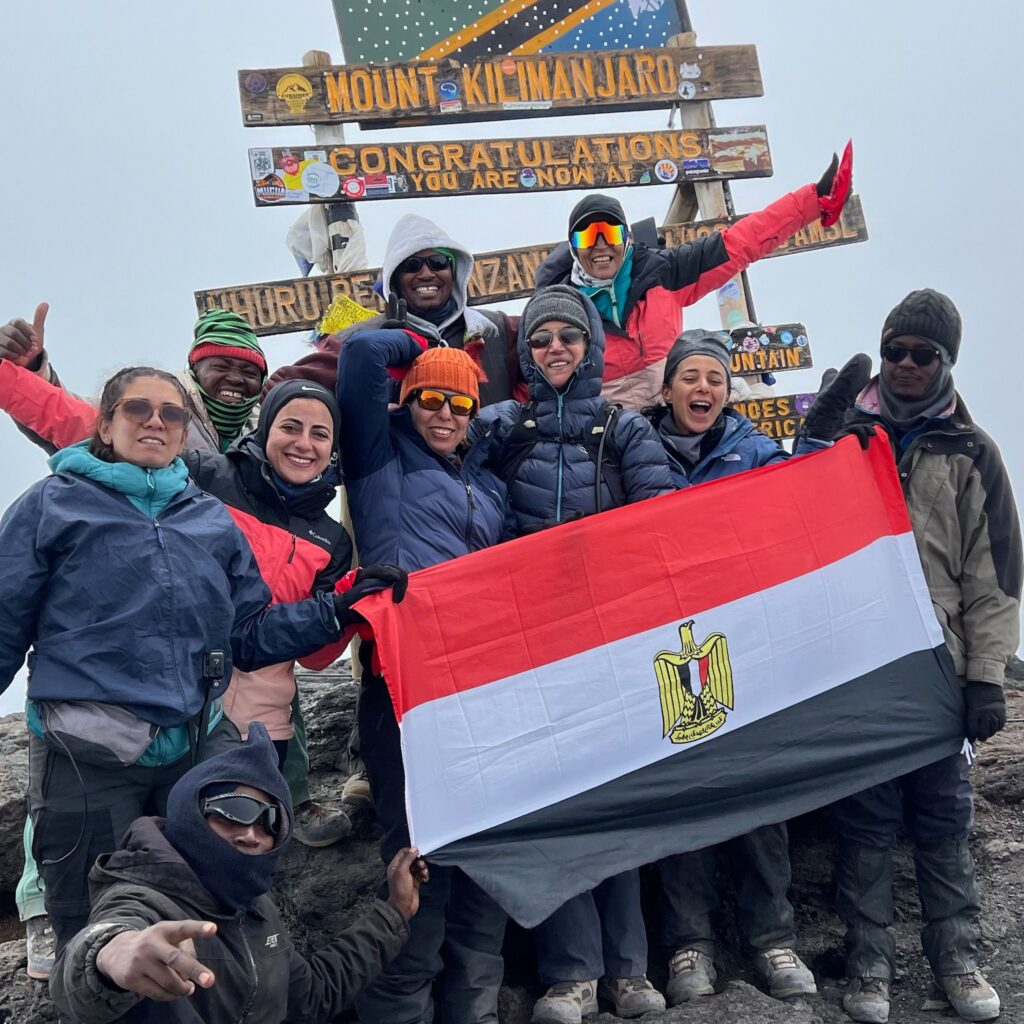
The moment of reaching the summit: How did you feel the moment your feet touched the “Africa Summit” and you raised the Egyptian flag alongside your friends?
Reaching the summit was one of the proudest moments of my life. I was incredibly happy and relieved to have accomplished this difficult task and reached my goal safely.
For me, it wasn't just about climbing to the highest peak in Africa; it was a personal triumph over all the stereotypes associated with getting older. I felt I had proven to myself first and foremost that dreams aren't limited by age, and that a person can achieve anything they want as long as they have the will and determination.
Our feelings at the summit were indescribable. We hugged each other with overwhelming joy, exchanged congratulations and kisses, and wept with emotion after long days of fatigue and exertion. We sang, celebrated, and took commemorative photos, and one of the moments I cherish most was raising the Egyptian flag on the highest peak in Africa.
It was a moment of great pride, a moment of true triumph, and it will remain one of the most beautiful and impactful memories in my heart as long as I live.
The truth is that we were almost alone on the summit at that moment, and we wished we could have stayed longer and enjoyed the view more, but the wind was very strong and cold, and did not allow us to stay long, so we had to start the descent after a short time.
Despite the short time we spent there, those few minutes were enough to remain etched in our memories forever.
You previously mentioned that mountain climbing taught you inspiring lessons and a unique experience with ADHD; how did this adventure help you understand and develop your inner strength?
There is a famous English saying that a person does not know how strong he truly is until he is put to a real test, and that is exactly what happened to me during this experience.
Climbing the mountain was not easy at all. The high altitudes, the lack of oxygen, and the continuous physical exertion all made the challenge more difficult than I had imagined.
I was also part of a group of people who were very fit and experienced in running and mountaineering, so I sometimes felt I had to put in more effort to achieve the same result. It wasn't because I lacked confidence, but because it's human nature to compare oneself to others, especially when surrounded by exceptional individuals.
I also have occasional ADHD issues, so I thought maintaining focus during such a long and arduous journey would be one of my biggest challenges. But what happened on the night of the ascent completely surprised me.
That night, I had nothing on my mind but reaching the summit. I wasn't thinking about the harsh weather, the difficulty of the climb, or the fitness levels of those around me. My focus was solely on the next step, and then the one after that, and on persevering no matter what. Even when I saw some people who were physically stronger than me forced to turn back and not complete the ascent, it didn't distract me or affect my concentration. My goal was clear before me, and all I thought about was keeping going until I reached it.
This experience revealed a new side of me. It proved that I can focus much more than I imagined when I have a clear goal that I truly believe in. It also confirmed that a person is capable of overcoming many difficulties and obstacles when they possess the will and conviction to pursue their goals.
Therefore, reaching the top wasn't just a physical achievement for me; it was also a profound psychological and mental accomplishment. I felt I had overcome many of the doubts and fears within me, and I discovered that I was much stronger than I thought, and that human limitations are often far greater than we imagine.
The page documents the stories of hundreds of inspiring Egyptian women; how do you see the impact of these stories in changing the stereotypical image of Egyptian women, both locally and globally?
One of the main reasons that motivated me to launch the “Women of Egypt” initiative was my feeling that there was a significant gap in the media coverage of women’s news and achievements. Success stories often received far less attention than news about crime, violence, scandals, and celebrities, while women’s accomplishments, struggles, and successes were frequently overlooked.
Furthermore, a comparison between the amount of media coverage dedicated to the successes of men and that of women clearly revealed a significant gap. This is where the idea for "Egyptian Women" came from; to help bridge this gap by presenting inspiring stories of successful Egyptian women in various fields, and giving them the space they deserve.
The truth is, the impact was far greater than we anticipated. Due to the clear lack of this type of content, many local and international media outlets began reporting the stories we were publishing. Global platforms and international organizations even contacted us to learn about the women behind these stories, to benefit from their experiences, and to showcase their achievements more widely.
In the initiative's early years, we discovered a wealth of inspiring stories, both of pioneering women who left an indelible mark on history and of contemporary women achieving remarkable feats without much recognition. Therefore, I believe one of the most significant achievements of "Women of Egypt" was its contribution to bringing these successful role models to the forefront and giving them the recognition and attention they deserve.
 Over the past few years, we have begun to notice the emergence of dozens of pages and platforms that are interested in the same content, and there has been a greater interest in the success stories of women in multiple fields, including the sports field, where the achievements of female athletes have become more widely covered after being almost absent compared to the achievements of male athletes.
Nearly ten years after the initiative's launch, I feel immensely proud that we've been able to highlight the stories of over 20,000 Egyptian women across various fields. I believe we've succeeded in breaking the ice and making women's success stories a central part of online and social media content.
Despite all that has been achieved, thousands of inspiring stories remain untold, and women continue to achieve new milestones every day, deserving of having their stories told. That's why we persevere. Having these successful role models is crucial because seeing women like themselves who have achieved their dreams gives girls and women confidence and hope, assuring them that success is possible and that the path to achieving goals is open to everyone.
I believe we have also succeeded in changing a significant part of the stereotypical image of Egyptian women, both in local media and internationally. There were limited perceptions of Egyptian women, but through the thousands of stories we published, we were able to present a different and more realistic image; an image of the successful, creative, influential Egyptian woman, capable of achieving accomplishments in various fields. This has helped many, both inside and outside Egypt, to recognize the extent of the successes and achievements that Egyptian women accomplish every day.
After climbing Kilimanjaro, developing the “Egyptian Women” platform, and publishing your works, what is the next “mountain” (literally or figuratively) that Alexandra Kinias is preparing to climb in the coming period?
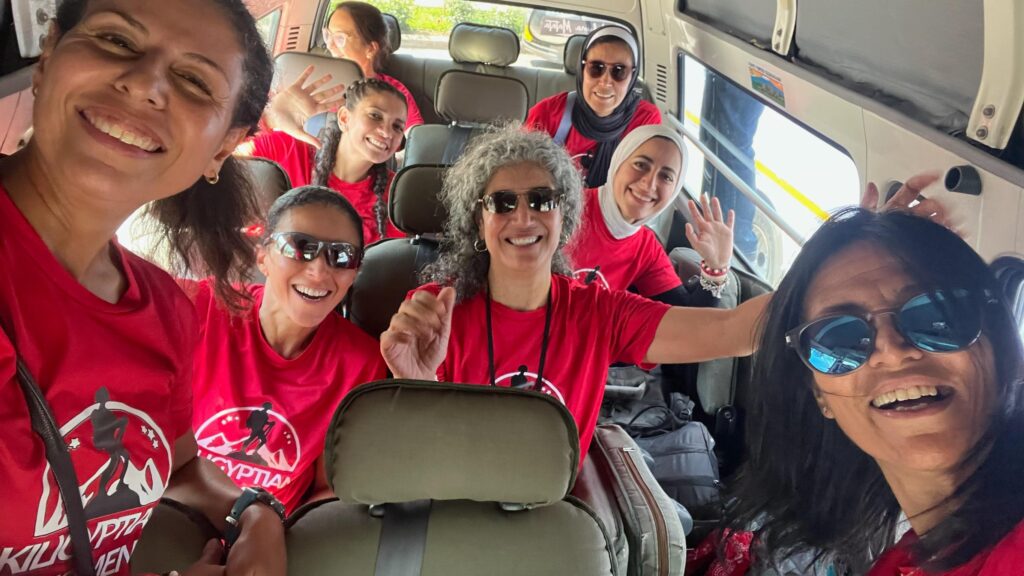
As for the next mountain, in both the literal and figurative sense, I recently returned from Peru after participating with the Kiligyptian Women team, the same team with whom I climbed Mount Kilimanjaro, in a hiking trip along the Inca Trail from Cusco to Machu Picchu.
The four-day journey involved hiking and camping amidst breathtaking scenery and diverse terrain, and it was a challenging adventure. During the trek, we reached an altitude of approximately 4,200 meters above sea level, a considerable height where the oxygen concentration drops significantly to about 401 TP3T lower than at sea level.
It's true that the challenges we faced on this trip were different from those of Kilimanjaro, but I believe that every mountain and every journey has its own unique nature and difficulty, and that's why I don't like comparing experiences. In the end, thank God, we were able to complete the journey and reach our destination successfully.
Looking ahead, I hope to continue embarking on more adventures and new experiences. But what interests me most is being able to encourage more women to travel, explore the world, have adventures, and try new things.
One of the strongest convictions I hold is that age is just a number, and that a woman should not give up on her dreams or hesitate to exercise or have new experiences because of some societal ideas that sometimes try to convince her that she is too old to start something new or achieve a new goal.
I also believe that maintaining health and fitness, and continuing to learn, develop, and experience different things, are not limited by age. This is why I wanted to focus more on empowering women through travel and adventure, because these experiences not only give a person beautiful memories, but also build self-confidence, broaden horizons, and reveal abilities they never knew they possessed.
In parallel, through the “Women of Egypt” initiative, we will continue to work on raising awareness of various women’s issues and developing the platform to be more influential and widespread, so that its message reaches its intended audience.