From death sentence to the presidency of Zimbabwe: Mnangagwa stirs controversy again (Profile)
Who is Mnangagwa?
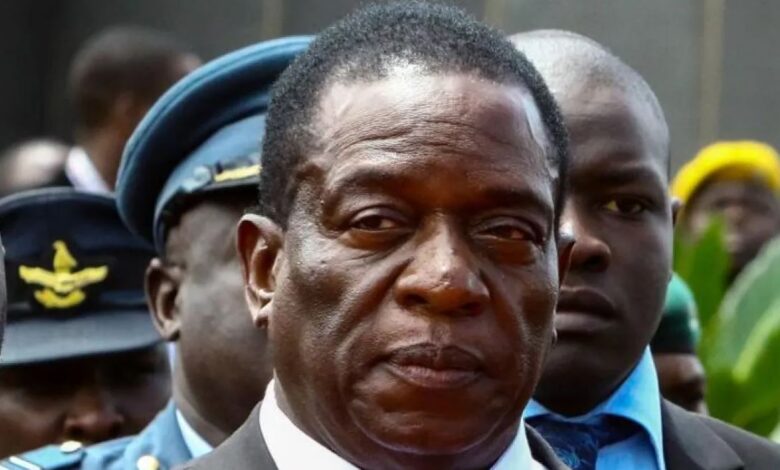
Written by Ziad Abdel Fattah:
Zimbabwe's parliament debated a controversial bill to amend ConstitutionThis would extend President Emmerson Mnangagwa’s term by two years, ending in 2030.
The amendment will also abolish general presidential elections and grant parliament the power to appoint the head of state.
In the following lines, Zoom Africa News presents a profile of Emmerson Mnangagwa.
Emmerson Mnangagwa, born September 15, 1942, Zvishavane, Southern Rhodesia (now Zimbabwe), is a Zimbabwean politician who has served as President of Zimbabwe since 2017.
One of the veterans of the National Union
Mnangagwa is a veteran of the Zimbabwe African National Union-Patriotic Front, one of the country's liberation movements, which later became the ruling party.
Emmerson Mnangagwa won two elections (2018, 2023) and has remained in power since succeeding long-time President Robert Mugabe, although both elections were marred by allegations of fraud.
Mnangagwa previously served as vice president and held several ministerial positions under Mugabe. He has led the Zimbabwe African National Union-Patriotic Front party since 2017 and is known by the nickname “The Crocodile.” He once said of being likened to this reptile that he strikes at the right time.
The Zimbabwe African National Union-Patriotic Front (ZANU-PF) is a political organization that has been the ruling party in Zimbabwe since independence in 1980.
The party was led for many years by Robert Mugabe, first as prime minister with the Zimbabwe African National Union (ZANU) and then as president from 1987 after merging with the Zimbabwe African People’s Union (ZAPU) and retaining the name ZANU-PF.
Birth and upbringing
Mnangagwa was born into a peasant family in the mining town of Zvishavane, which was then part of the British colony of Southern Rhodesia.
Because of his father’s activism against white settlers, the family was forced to flee to Northern Rhodesia (present-day Zambia).
Mnangagwa inherited this fighting spirit and joined the liberation movement against British rule, which led to his expulsion from university in 1960. Mnangagwa joined the Zimbabwe African People’s Union (ZAPU) in 1962, but the following year, when the organization split, he chose to join the faction that later became known as ZANU-PF.
Mnangagwa received military training in the early 1960s in Tanganyika (present-day Tanzania), Egypt, and China. In 1965, he was sentenced to death after participating in a sabotage operation that resulted in the bombing of a train in Fort Victoria (present-day Masvingo, Zimbabwe), but his sentence was reduced to 10 years in prison. After his release, Mnangagwa obtained a law degree from the University of Zambia.
Shortly after joining the bar association of the Supreme Court of Zambia, Mnangagwa headed to Mozambique, one of the neighboring countries that Zimbabwe had used as a base for its struggle for liberation.
In 1977, Mnangagwa was chosen as an aide to Mugabe, a leader of the liberation movement. They were together when Mugabe negotiated the end of white-dominated Rhodesia, leading to the birth of Zimbabwe and the 1980 elections, in which ZANU-PF won a landslide victory.
Mugabe became prime minister, and in 1987 he became the country’s first chief executive, cementing the one-party rule that lasted for decades.
Multiple positions in Mugabe's government
Mnangagwa served in Mugabe’s government for many years, holding positions including Minister of Justice and Minister of Defence.
He also oversaw the Central Intelligence Agency in the mid-1980s, a period marred by allegations of his involvement in Operation Gokurahundi – meaning “purifying rain” in the Shona language – which resulted in the deaths of thousands of political opponents and civilians, mostly from the Ndebele ethnic group. Mnangagwa has denied any responsibility for these atrocities.
Rise to the presidency
In 2014, Mnangagwa replaced Joyce Mujuru, a veteran of the war against the white Rhodesian government, as Zimbabwe's vice president, after Mugabe's wife, Grace, attacked Mujuru's character.
Mujuru was considered a possible successor to Mugabe, who was 89 years old when he was sworn in as president in 2013. But just a few years later, in 2017, the president’s wife turned her animosity toward Mnangagwa, just as Mugabe had done.
On November 6, Mugabe dismissed Mnangagwa, who subsequently fled the country. Mnangagwa was later expelled from ZANU-PF, and it appeared that Mugabe's family and some of their supporters were pushing for Grace Mugabe to become Zimbabwe's next president. However, the Zimbabwean military, angered by the dismissal of liberation war veterans like Muguru and Mnangagwa, seized power on November 15 and placed Mugabe under house arrest.
Thousands of people took to the streets demanding the president's resignation, and after ZANU-PF initiated impeachment proceedings in parliament, he stepped down, ending his 37-year rule. Mnangagwa returned to the country and assumed the role of interim president on November 24, pledging to implement economic and political reforms. He was also chosen as the new leader of ZANU-PF and the party's candidate for the 2018 presidential election, decisions ratified at an extraordinary party congress the following month.
Mnangagwa is president
In the 2018 presidential election, Mnangagwa won a five-year term with approximately 511,000 votes, defeating opposition leader Nelson Chamisa. However, the results were marred by allegations of fraud, with Chamisa claiming to be the rightful winner. During Mnangagwa's first term, problems of corruption, soaring inflation, and unemployment persisted. These were partly a legacy of Mugabe's government, but the new president was either unable or unwilling to address them.
Mnangagwa faced Chamisa and nine other candidates in the 2023 presidential election. Mnangagwa was declared the winner again, after receiving approximately 53% of votes.
Allegations of fraud resurfaced. Chamisa and the opposition rejected the results, and international observers also criticized the elections. The EU mission stated: “During the electoral process, fundamental freedoms were increasingly restricted… leading to a climate of fear.”.
She added, “The electoral process did not meet many regional and international standards, including equality, inclusivity, and transparency.” In a post on X (formerly Twitter), Mnangagwa wrote, “This victory is a testament to the power of unity and progress. Together, we will continue to build a brighter future for Zimbabwe.”.