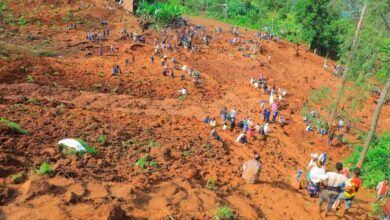
Chad's Council of Ministers discusses new decisions in justice, education, and mining.
New steps to strengthen governance
Written by Ziad Abdel Fattah:
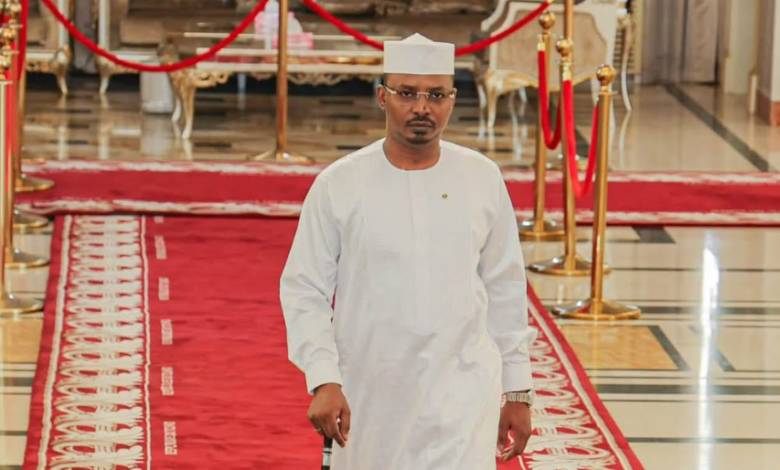
The Chadian President, Marshal Mohamed Idriss Déby ItnoThe President of the Republic and Head of State, chaired the regular meeting of the Council of Ministers, which was held on Thursday at the Toumai Palace in the capital N'Djamena, to discuss a package of draft decrees and reforms aimed at improving government performance and strengthening institutional and administrative reforms.
Discussion of five draft decrees
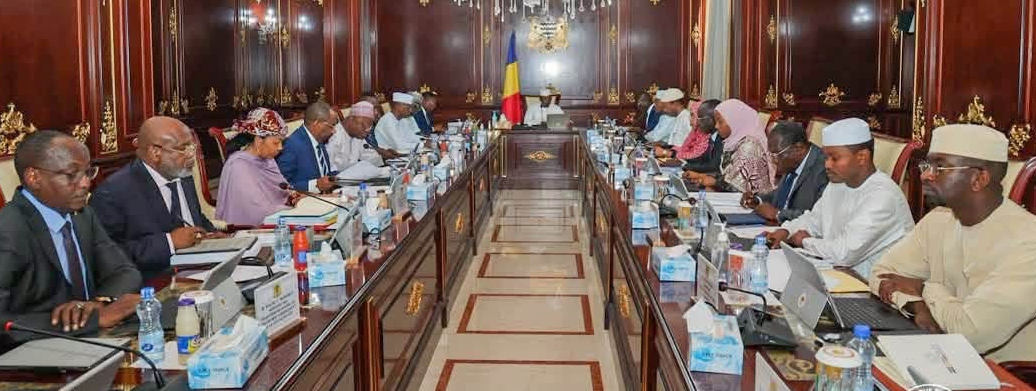
The meeting witnessed the discussion of five draft decrees, in addition to a draft order, within the framework of implementing the government program, supporting the efficiency of state institutions, and improving the performance of priority sectors.
In the justice sector, the council reviewed a draft decree to appoint a notary public with an office in the capital, N’Djamena, as part of efforts to strengthen the legal system and develop judicial services.
In the higher education sector, the council also discussed a draft decree to reorganize the National Center for University Services and modernize its working mechanisms, in order to improve the services provided to students and academic institutions.
With regard to the Ministry of Armed Forces, Veterans and War Victims, the Cabinet studied a draft order to cancel the 2022 order on the establishment of a military engineering and production authority, as part of a review of the organizational structures of military institutions.
In the mining sector, the Council discussed a draft decree to establish a national mechanism for regulating and managing the Extractive Industries Transparency Initiative in Chad, which promotes the principles of governance and transparency in the management of natural resources.
The Council also discussed a draft decree to approve the statutes of the National Mining and Marketing Company (SONEMIC), along with a draft decree to repeal two previous decrees issued in 2023 and 2024, as part of the process of updating the regulatory framework for the sector.
The decisions come as part of the Chadian government’s direction to continue implementing its reform program, enhancing the efficiency of institutions, and improving the management of vital sectors, in order to support economic and administrative development efforts in the country.
In another context, the National Coordinator for Support and Follow-up intensified Sensitization The advisor, Mohamed Saleh Abdel Jalil, is conducting field visits to the Batha region in eastern Chad to mobilize pastoral and nomadic communities as part of efforts to ensure that these communities are included in the third general census of population and housing, just days before the conclusion of the field phase of the national statistical process.
The tour included several remote and hard-to-reach areas, where the national coordinator observed the conditions of communities not yet reached by census teams. He emphasized that urgent measures were being taken to cover these areas and include their residents in the national database. He stressed that the success of the census depends on the statistical teams reaching all citizens without exception, including nomadic populations whose mobile lifestyle presents additional challenges to the enumeration process.