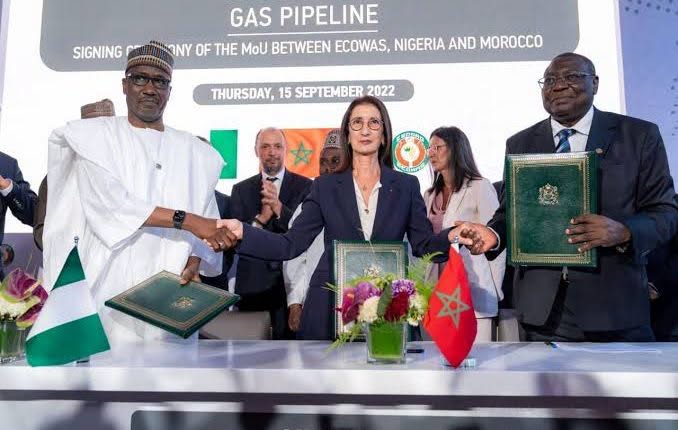
Signing of a historic agreement to launch the Atlantic gas pipeline between Nigeria and Morocco
Written by: Ayman Ragab
The heads of state of the Economic Community of West African States (ECOWAS) signed an agreement on Sunday, July 19, 2026, approving the construction of the African Atlantic Gas Pipeline (AAGP), which will connect Nigeria to Morocco along the coastlines of thirteen African countries. This signing embodies ECOWAS' commitment to this structural and integrative project.
In Freetown, Sierra Leone, on the sidelines of the 69th Ordinary Session of the Economic Community of West African States (ECOWAS), the Heads of State and Government of the Economic Community of West African States (ECOWAS) signed an Intergovernmental Agreement approving and setting out a framework for the construction of a gas pipeline linking Nigeria to Morocco, called the African Atlantic Gas Pipeline (AAGP).
This measure is a highly strategic step for the countries participating in this structural project, including the Economic Community of West African States (ECOWAS), Mauritania, Morocco, and the European countries. It clearly demonstrates ECOWAS' commitment to the project, which will undoubtedly stimulate significant economic growth that will benefit the region's population.
These intergovernmental agreements resolve all sensitive issues including sovereignty over transboundary portions, revenue sharing, and environmental responsibilities… In short, these agreements define the management of the gas pipeline between the Economic Community of West African States (ECOWAS).
Removing the last obstacle
By signing this agreement, the region’s leaders have removed the last obstacle to the creation of this strategic energy infrastructure, and the institutional framework for this gas pipeline will be finalized through a subsequent joint signing between Morocco and Mauritania, two countries that are not members of the Economic Community of West African States (ECOWAS), in the presence of the Nigerian president.
Based on this decision, two entities will be created: the Project Company, based in Casablanca (Morocco), which will be responsible for the financial structuring through the mobilization of a mix of equity, debt and operational management, and the Gas Pipeline Management Authority (GPA), which is to be headquartered in Abuja (Nigeria).
Once these two entities are established, the focus will be on mobilizing investors and preparing the final investment decision, given that the technical, environmental and engineering studies have already been completed.
The project is estimated to cost $25 billion, making it one of the most ambitious projects in Africa. The use of a special purpose vehicle (SPV) will facilitate the raising of funds through sovereign loans, bonds, and public-private partnerships. In fact, several partners are expected to contribute to the project's financing, including the United Arab Emirates, the Islamic Development Bank, and the OPEC Fund for International Development.
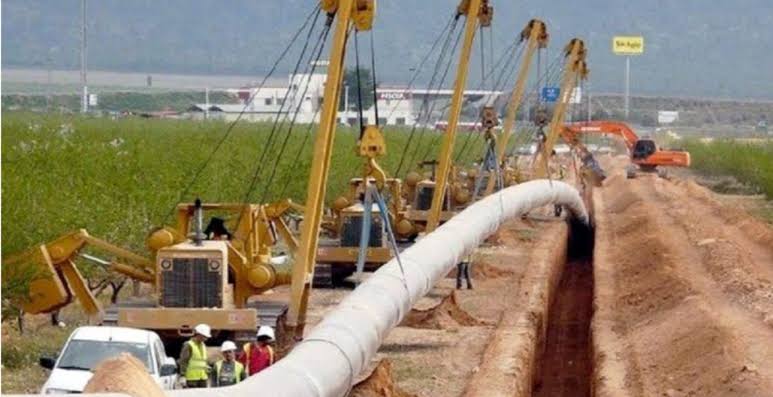
The African Atlantic Gas Pipeline (AAGP) will pass through 13 countries, with a total length of approximately 6,900 kilometers. The Moroccan section will be the longest, stretching over 2,220 kilometers, including 1,830 kilometers overland between Dakhla and Ouezzane, and 390 kilometers offshore between Lagouira and Dakhla.
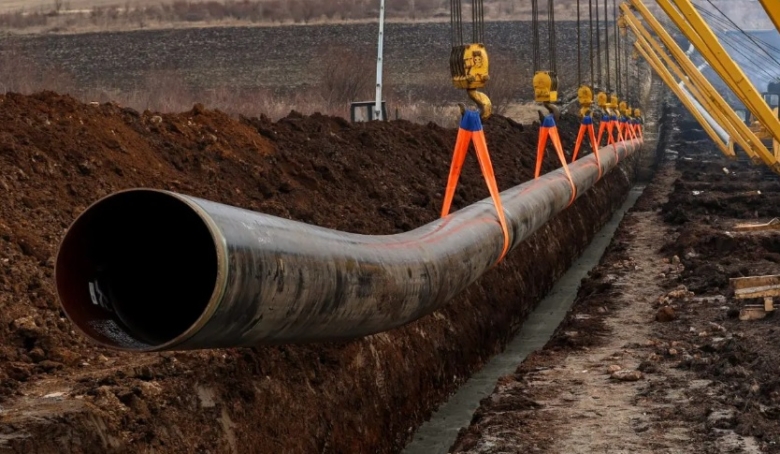
To benefit all the countries along the gas pipeline route, it includes phased connections between different nations. The initial sections will link Morocco to the gas fields in Mauritania and Senegal. Another section will connect Ghana to Côte d'Ivoire. Finally, a last section will connect Ghana to the gas fields in Nigeria. By selecting these independent sections, the project's developers plan to bring it online gradually. Gas shipments from the initial phases are expected to begin in 2031.
Construction of the gas pipeline is expected to begin in 2028, with the first gas shipments slated for 2031. The pipeline's target annual transport volume will be 31 billion cubic meters of natural gas. Half of this volume will be exported to Morocco and Europe, while the other half will be used to supply regional markets to support electricity generation and manufacturing, according to le360.
Therefore, once this gas pipeline is completed, it will contribute to the region’s energy security and will be a key driver of sovereignty, industrialization and shared prosperity.
Africa-Atlantic Gas Pipeline Route
The joint statement issued by Morocco’s National Office of Hydrocarbon Resources and Mines and the Nigerian National Petroleum Corporation said that this gas pipeline ”aims to connect West Africa’s gas resources to key regional consumption centers, while promoting the integration of African energy markets and creating a new development corridor linking West Africa, the Sahel countries, the Kingdom of Morocco and Europe.”.
Nigeria, with estimated gas reserves of 209 trillion cubic feet, possesses the largest reserves in Africa and the seventh largest in the world. However, these reserves remain largely untapped, as the country's leaders have thus far prioritized oil production over gas.
However, global geopolitical turmoil in the gas market, fueled by the Russian-Ukrainian war, has forced Europe to seek new supply sources, and Nigeria intends to capitalize on this situation. For Africa's most populous nation, which currently exports its gas as liquefied natural gas (LNG), this pipeline would be a major boon, enabling it to ship larger volumes of gas more efficiently, safely, and profitably.
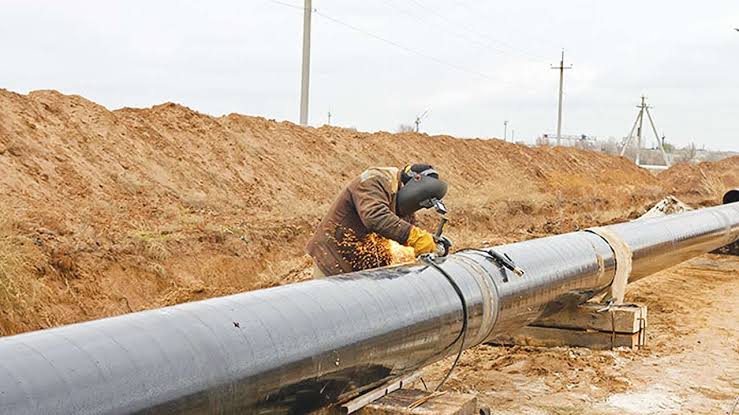
In addition to Nigeria, Côte d'Ivoire has become a gas producer thanks to the Balen and Callao fields. In Senegal, the Senghor and Yakaar-Teranga fields, with estimated recoverable reserves of 70 and 1.4 trillion cubic meters respectively, could contribute to supplying the African Atlantic Gas Pipeline. The same applies to the Grand Tortue Ahmeyim field, located on the border between Senegal and Mauritania, which is expected to begin production in 2025. Its reserves are estimated at 1.4 trillion cubic meters, of which 560 billion cubic meters are recoverable.
It is worth noting that the idea for the gas pipeline was launched in 2016 by King Mohammed VI during a historic visit to Abuja. Since then, teams from the National Hydrocarbons Office and the Nigerian National Petroleum Corporation have been working tirelessly to complete this vital project.