Discussing vital issues: Egypt hosts meetings of the Sahara and Sahel Observatory
Strengthening joint African action
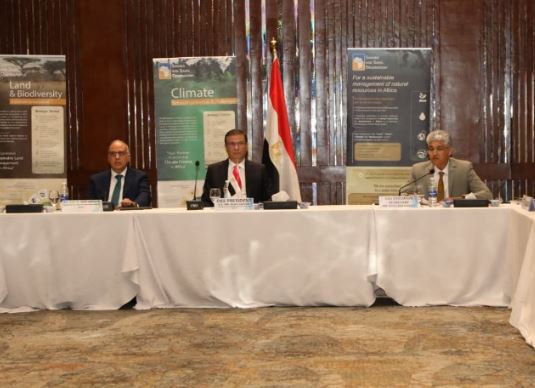
Egypt hosted the opening events of the 33rd session of the Board of Directors of the Desert Observatory. and the coastWith high-level participation from ministers and representatives of member states and regional and international organizations.
The opening session was attended by a number of Ministers The officials included Alaa Farouk, Minister of Agriculture and Land Reclamation and Chairman of the Board of Directors of the Observatory, Dr. Hani Sweilem, Minister of Water Resources and Irrigation, Habib Al-Abeid, Minister of Environment of the Republic of Tunisia, Sam Cheptoris, Minister of Water and Environment of the Republic of Uganda, and Bakheet Hassan, Minister of Environment, Fisheries and Sustainable Development of the Republic of Chad, along with Nabil Ben Khatra, Executive Secretary of the Observatory.
Supporting regional efforts to address challenges
In his speech, Alaa Farouk, Minister of Agriculture and Land Reclamation and Chairman of the Board of Directors of the Observatory, stressed the importance of this event in promoting joint African action and supporting regional efforts to address environmental and climate challenges.
The Minister of Agriculture explained that holding this session in Cairo reflects a firm conviction that regional integration and collective action have become an urgent necessity in light of the accelerating climate changes and increasing pressure on natural resources, noting that the meeting represents an opportunity to renew the joint commitment to supporting sustainable development paths in member states.
The Minister welcomed the participating delegations, headed by the Ministers of Environment and Water from a number of African countries, stressing that the Sahara and Sahel Observatory has succeeded over the past years in consolidating its position as a reliable regional and international partner, through the tangible achievements it has made in the areas of natural resource management and adaptation to climate change.
He pointed out that current environmental challenges, most notably climate change, land degradation, water scarcity, and biodiversity loss, require integrated collective responses, which reinforces the pivotal role of the observatory as a regional platform supporting the exchange of experiences, capacity building, and the development of sustainable solutions.
He added that the agenda of the current session includes a number of strategic priorities, including enhancing the effectiveness of program implementation, consolidating financial sustainability, developing governance mechanisms, and expanding the scope of regional and international partnerships, which will contribute to maximizing the impact of the Observatory’s interventions during the next phase.
The Minister stressed the importance of member states paying their annual contributions regularly, as a key pillar to ensure the continuity of the Observatory’s work and the expansion of its programs, emphasizing the need to intensify efforts to mobilize resources from technical and financial partners to support future work plans.
Achieving common goals
He also expressed his appreciation for the confidence shown by the General Assembly of the Observatory in renewing his chairmanship of the Board of Directors for the period (2025–2029), stressing the continuation of work in a spirit of commitment and cooperation to achieve common goals.
In closing, the Minister of Agriculture expressed his hope that the session would produce practical results and recommendations that would enhance the role of the Sahara and Sahel Observatory and contribute to supporting the efforts of member states towards achieving sustainable development and preserving natural resources.
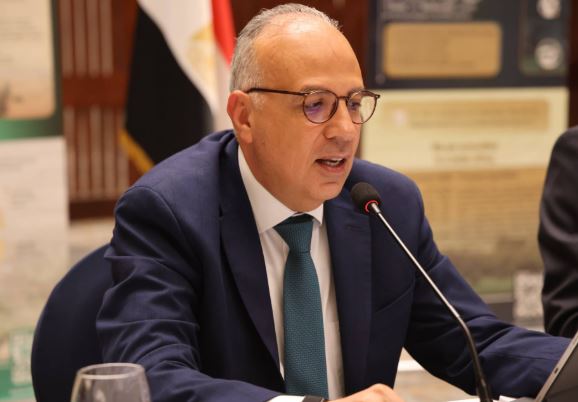
In his speech during the opening session, Dr. Hani Sweilem, Minister of Water Resources and Irrigation, pointed out that this important international event is an opportunity to discuss one of the most prominent challenges facing our contemporary world, which is the management of natural resources in light of accelerating climate changes and increasing pressures on ecosystems, which requires the adoption of integrated policies that ensure the preservation of these resources and maximizing their benefit, as natural resources - foremost among them land, water and ecosystems - represent the basic pillar for achieving sustainable development.
Water resources are a pivotal element in the natural resources system due to their close connection with land issues, biodiversity and climate change. Therefore, integrated water resources management is one of the main pillars for promoting the sustainability of ecosystems and supporting efforts to adapt to climate change, especially in arid and semi-arid regions.
For his part, Dr. Hossam Shawky, President of the Desert Research Center and National Coordinator of the Observatory in Egypt, affirmed that the center continues to support these trends through its scientific research and applied projects aimed at achieving the sustainable use of natural resources and enhancing the ability to adapt to climate change.
The meetings of the session resulted in a set of practical recommendations that reflect the priorities of the next stage, most notably: adopting an ambitious action plan for the next stage, increasing funding allocated to climate and desertification projects, supporting digital transformation in the agricultural sector in the African continent, expanding the use of satellite applications and artificial intelligence, in addition to launching joint regional projects in water, land and agriculture.
The recommendations also included improving the efficiency of early warning systems, enhancing the role of women and youth in green development, supporting food security for the most affected countries, and increasing integration among African research institutions.