Africa's Infrastructure Revolution: 10 Projects Returning the Continent to the Heart of the Global Economy
Massive investments are driving Africa's economic transformation.
Written by: Mohammed Omran
Witnesses Africa Over the coming years, a broad transformation will take place in its economic and developmental structure with the implementation of a number of mega-projects aimed at changing the shape of the continent and linking its countries together, and improving their ability to compete in the global economy. These projects include the transport, energy, trade and technology sectors, and come in light of an African trend to enhance regional integration and reduce dependence on exporting raw materials only.
Africa's Infrastructure Revolution: 10 Projects Returning the Continent to the Heart of the Global Economy
These projects are attracting widespread international attention, as major powers such as China, the United States and the European Union compete to strengthen their presence within the continent, especially given Africa’s strategic resources such as critical minerals and renewable energy, in addition to a huge consumer market of over 1.4 billion people.
Lobito Passage
The Lobito Corridor is one of the most prominent infrastructure projects that could change the trade map in Africa, linking the mining regions of the Democratic Republic of Congo and Zambia to the port of Lobito on Angola’s Atlantic coast.
The project’s importance lies in the fact that it serves areas rich in strategic minerals, especially copper and cobalt, which are among the most important minerals used in the manufacture of electric car batteries, renewable energy and modern technology. The project relies on developing the railway line that crosses Angola, in addition to improving roads, ports and logistics infrastructure.
The United States and the European Union are seeking to support this corridor as a strategic route for diversifying African mineral export routes and reducing reliance on routes controlled by China. The project could also evolve into a future trade hub linking Central Africa to the Atlantic Ocean, giving landlocked countries greater access to global markets.

Tanzania-Democratic Republic of Congo Railway Project
The project aims to create and develop a railway network linking mining areas in southeastern Democratic Republic of Congo with Tanzanian ports, primarily the port of Dar es Salaam on the Indian Ocean, thus facilitating the transport of copper, cobalt, and minerals used in the battery and electric vehicle industries.
The Democratic Republic of Congo relies heavily on mineral exports, but faces challenges due to weak transport networks and high shipping costs, so railway development represents an important solution to increase the competitiveness of African products in global markets.
Tanzania is developing its Standard Gauge Rail (SGR) network, one of the largest transport projects in East Africa, with the aim of linking ports to the interior, while the Democratic Republic of Congo is seeking to improve its export routes for mineral resources.
The project's impact is not limited to mining; it can support regional trade, connect landlocked countries to ports, and create new opportunities for investment, industry, and logistics.
The project is part of a broader African trend to develop cross-border transport corridors, such as the Lobito corridor, with the aim of transforming infrastructure into an engine for economic growth and enhancing integration between the countries of the continent.

Grand Inga Project
The Grand Inga project in the Democratic Republic of Congo is one of the most ambitious energy projects in the world, relying on the enormous potential of the Congo River, which is one of the strongest rivers in terms of water flow.
The project's theoretical capacity is expected to reach more than 40,000 megawatts upon completion, a huge capacity that could make the Democratic Republic of Congo a major center for electricity production and export on the continent.
The project aims to provide energy for industry and homes within Congo, as well as exporting electricity to other countries, helping to reduce the energy shortage crisis that large parts of Africa are suffering from.
However, the project faces significant challenges, most notably the enormous amount of funding required, the need to develop electricity transmission networks, in addition to political and administrative challenges.

African Free Trade Area
The African Continental Free Trade Area (AfCFTA) agreement is one of the largest economic initiatives in Africa’s history, aiming to create a single market of more than 1.4 billion people.
The agreement aims to remove trade barriers between African countries, reduce customs duties, and encourage the movement of goods, services, and investments between countries.
The importance of the project lies in its aim to change the nature of the African economy, from an economy that relies heavily on the export of raw materials to an economy based on manufacturing and shared production chains.
The World Bank believes that the success of the free trade area could raise the level of trade within the continent and help African companies access new markets.
Trans-African Railway Network
Many African countries are working to develop railway networks with the aim of connecting inland areas to ports and global markets.
These projects include developing railway lines in East Africa, linking Tanzania with the Democratic Republic of Congo, and modernizing transport networks in Kenya, Ethiopia, and South Africa.
Railways are a key element in the future of African trade, especially since poor transport infrastructure is one of the biggest obstacles to the movement of goods between countries.
These projects are expected to help reduce transportation costs, accelerate the movement of minerals and agricultural products, and boost trade between African countries.

Desert to Energy Initiative
Africa has enormous potential in solar energy, yet millions of people on the continent still suffer from a lack of electricity.
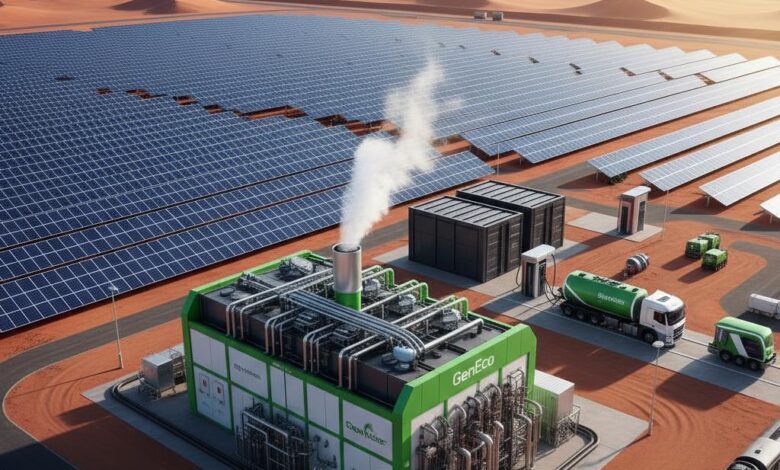
For this reason, the African Development Bank launched the “Sahara to Power” initiative with the aim of developing solar energy projects in the Sahel region, targeting the production of about 10 gigawatts of electricity by 2030 and connecting millions of people to power grids.
The initiative aims to transform African desert regions into centers for clean electricity production, and to support the industrial, agricultural and service sectors.
These projects can also help reduce reliance on fossil fuels and enhance Africa's position in the global renewable energy market.

Tangier Med Port
The port of Tangier Med in Morocco has become one of the most important logistics projects in Africa and the world, thanks to its strategic location close to Europe and its ability to receive giant ships.
The port is no longer just a hub for transporting goods, but has become an integrated industrial zone that has attracted global companies in the automotive, aviation and logistics sectors.
The project has helped to strengthen Morocco’s position as a trading hub linking Africa with Europe and Asia, and has become a model for how infrastructure can be used to attract investment and achieve economic growth.

Benban Solar Park
The Benban Solar Park in Egypt’s Aswan Governorate is one of the world’s largest solar power projects, with a total capacity of about 1.5 gigawatts.
The complex includes dozens of solar power plants that have contributed to increasing clean electricity production and supporting Egypt's plans to transition towards renewable energy.
The project represents an important experience for African countries seeking to exploit their natural resources, especially solar energy, to provide electricity and support industrial development.

green hydrogen
North African countries are seeking to become a global hub for green hydrogen production, taking advantage of their large solar and wind energy resources.
Large projects are underway in Egypt, Morocco, Mauritania, Algeria and Tunisia, aimed at producing clean fuel that can be exported to Europe and global markets.
Green hydrogen is one of the sectors that African countries are counting on to boost their exports and diversify their sources of income, especially with the world moving towards reducing carbon emissions.

The digital revolution and data centers
Africa's technology sector is experiencing rapid growth with the expansion of data center projects, submarine internet cables, and financial technology services.
Countries such as Nigeria, Kenya, Rwanda, South Africa and Egypt stand out as emerging centers of technology and innovation.
The digital economy is expected to become one of the most important drivers of growth in the continent in the coming years, especially with the spread of smartphones and increased internet use.

How will these projects change the future of Africa?
These projects represent an attempt to reshape the future of the African continent, as they can contribute to improving infrastructure, reducing the cost of trade, increasing investments, providing new job opportunities, and supporting local manufacturing.
But the success of these projects will depend on the ability of African countries to provide financing, improve management, ensure stability, and transform these investments into productive projects that generate long-term economic value.
As these plans continue to be implemented, Africa could, in the coming decades, transform from a continent rich only in resources into a global hub for energy, trade, industry and technology.