The southern Bantu people... masters of iron and earth
A group that shaped history, culture, and language for centuries

Prepared by Dr. Alia Amer:
In the heart of the diverse African continent, there stands a group of people who have shaped history, culture, and language for centuries; they are the Southern Bantu people.
Their journey was not merely a settling in a geographical area, but a major historical migration that completely changed the face of the southern part of the African continent. From the riverbanks to the vast plains, these peoples carried with them the secrets of agriculture, the arts of metal smithing, and unique languages distinguished by the enchanting tones of “clicks.”.
The southern Bantu people outnumber all the inhabitants of southern Africa, and the southern Bantu homelands extend from the mouth of the Zambezi River and follow its course, then follow the Kunene River to its mouth in the Atlantic Ocean.
This includes the southern half of Mozambique, then Zambia and Zimbabwe, South Africa and the Southwest African region.

The southern Bantu peoples are divided into 4 groups:
1 - The northern section includes the Shona peoples spread across Zambia and Mozambique south of the Zambezi River. They are numerous tribes with similar cultures.
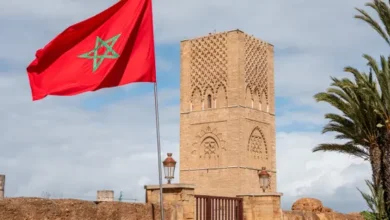
The region is famous for the remains of huge stone buildings, especially those buildings called the Zimbabwe ruins. Although we do not know much about the builders of that civilization, the prevailing opinion is that they are the remains of a Negro civilization, and not the work of an alien element, but perhaps they were made by the ancestors of some Shona tribes, who established a kingdom in the Zambezi River basin since the tenth or eleventh century AD.
2 - The second section of the southern Bantu peoples, whose main homelands are located to the east of the Drakenburg Mountains, starting in the north from the Sani River in southern Mozambique, and extending to the southeastern coasts.
The section includes two of the largest and most important southern Bantu groups: the Nguni and the Tsonga. The Nguni are perhaps the larger of the two, and some of them migrated north. Also included are the Swazi people, who live in the country named after them, Swaziland, and the famous Zulu people. A section of the Zulu in Zambia and Mozambique is called the Ndbele, and a group of them is called the Amandbele.
The Zulu became more famous than other inhabitants of southern Africa because, at the beginning of the 19th century, a brilliant warrior leader named Shaka emerged among them. He was able to conquer neighboring lands, expand their territory, and make the Zulu a powerful and formidable nation. Zulu dominance over the country lasted until around the middle of the 19th century, when the Boers began to challenge their authority in the region east of the Durrës Mountains. The Zulu still live in their territory, although their state was dismantled as a result of foreign occupation.
The Tsenga group, whose members mostly live in Mozambique, also includes a branch residing in the Transvaal. The group comprises three ethnic groups: the Tsenga, the Renga, and the Tsoua.

3- The third section of the southern Bantu: This is the central section, inhabiting the central plateau to the west and northwest of the Drakenburg Mountains. This plateau, located west of the mountains, receives less rainfall and vegetation than the coastal region, and is perhaps less densely populated for this reason, except for the mining areas in the northeast concentrated around Johannesburg, the capital of South Africa. Pretoria
The most important groups on the central plateau are the Venda in its northeastern region and the Sotho, who live directly west of the Drakenburg Mountains. It was the Sotho who formed the state of Basutoland, a British protectorate.
The Soto people within the protected area number over one million and enjoy remarkable social and economic progress.
Also from the Soto group are the tribes living in the protectorate called Bechuanaland, which represents a large area in the northwest of the plateau. Among the most famous tribes of Bechuanaland are the Ngratu tribe, and then the Tswana tribe, whose name was corrupted and applied to the entire protectorate.
4 – The fourth and final section of the southern Bantu group is the western section, the most important branches of which are the Herero and Amber tribes. They live in western South Africa, a region that was part of Germany before World War I.
Dr. Alia Amer:
A demographer specializing in gender studies and representative of North African countries to the African Union for Population Studies