The United States is looking to secure a share of Congo's copper.
Ahmed Salem
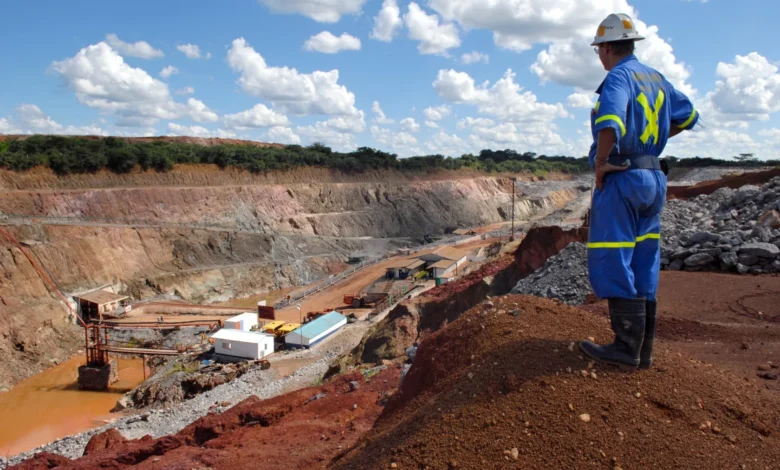
In huge warehouses at the Kamua copper mine, in southeastern Democratic Republic of Congo, mountains of red rock pile up amid machinery that works continuously day and night.
These deposits, rumored to be the largest in Africa, are one of the hidden treasures of the Democratic Republic of Congo, which lies at the heart of a global race for vital minerals.
In those facilities, thousands of workers produce red gold, which is highly sought after in international markets because it contains an exceptionally high percentage of copper.
“Kamua is currently one of the largest copper mines in the world, and it is growing to become the largest copper mine in Africa, and possibly the fourth largest in the world,” said Annibelle Oosthuizen, Managing Director of Kamua Copper SA.
The director added that the company aims to produce half a million tons starting in 2028, “a figure that matches global production capacity.”.
Uses of copper
The copper produced at the mine is used in many products, including electronic devices such as smartphones and computers, as well as electrical wiring, motors, and generators.
This deposit is one of the hidden treasures of the Congo, which lies at the heart of a global race for vital minerals.
Kamua ore is highly sought after because it contains four times more copper than the global average.
The Democratic Republic of Congo is one of the largest sources of vital minerals indispensable to global industry, and it produces more than half of the world's cobalt supply.
Now the United States is vying for a share of Congo's mineral wealth, seeking to challenge Beijing's control over these strategic resources.
Copper and cobalt are essential components in the manufacture of smartphones, computers, cars, and batteries. Copper is an excellent conductor of electricity, while cobalt allows for energy storage. These metals are also vital in the fields of aerospace, defense, and renewable energy.
The United Nations Conference on Trade and Development (UNCTAD) said that global demand for copper is expected to rise by more than 40 percent by 2040, while demand for cobalt is expected to quadruple by 2030.
Kamua Cooper SA
Kamua Copper SA is a joint venture equally owned by Canada’s Ivanhoe Mines and China’s Zijin Mining, with the Congolese state retaining a 20 percent minority stake.
China has invested heavily in the country for nearly 20 years, and is estimated to account for 70 percent of mining activity, according to the Congolese Chamber of Mines.
But in December, Kinshasa accepted a strategic partnership agreement with Washington as part of a peace deal for the Democratic Republic of Congo, which has suffered from conflict for more than 30 years.
The agreement has not yet succeeded in ending the fighting in the east of the country, but an initial list of 25 mining sites has been submitted to Washington for potential investment or exploitation licenses.
Memorandum of Understanding with the US-led Orion Critical Minerals Consortium
In February, commodities giant Glencore signed a memorandum of understanding with the US-led Orion Critical Minerals Consortium to give the latter a potential 40 percent stake in the Swiss group’s mining assets in the Democratic Republic of Congo.
“This will allow the United States to benefit from production coming from the Democratic Republic of Congo through Glencore,” said Marie-Chantal Kaninda, president of Glencore Democratic Republic of Congo.
Eric Calala, president of the state-owned General Cobalt company, said that the competition between the United States and China in the global race for strategic minerals "is not our war.".
General Cobalt holds a monopoly on marketing non-industrial cobalt production in the country. Kalala said they "work with everyone" and welcomed the fact that there is a willingness to invest in the Democratic Republic of Congo.
He added: “We are making an effort to try to attract them,” adding that the country is open to all investors, “provided that it is in the interest of Congo and the investors themselves.”.
The mining sector is the driving force behind the economy of the Democratic Republic of Congo, representing about half of the country's GDP, which is estimated at $10.9 billion.