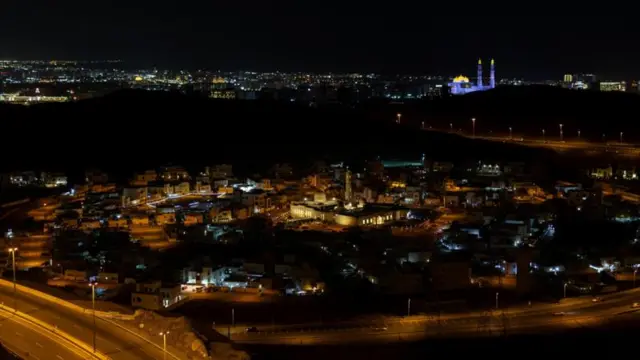
An earthquake measuring 4.6 on the Richter scale struck the Iranian capital, Tehran, without causing any injuries or loss of life.
The earthquake occurred on the border between Tehran and Mazandaran provinces, according to Fars News Agency.
The earthquake lasted for about 10 seconds without any aftershocks.
Tehran earthquake
In another context, US President Donald Trump confirmed on Tuesday that Iran “will not have a nuclear weapon,” announcing that Tehran had agreed not to possess such a weapon.
Trump stressed in remarks to reporters that his country “will only make a good deal with Iran.”.
He continued, "Either Iran does the right thing or we will finish the job," adding, "We have defeated Iran militarily and the embargo is 100% effective.".
Trump's statements
He indicated that oil prices would decrease once “the matter with Iran” was resolved, as he put it.
He said he would hold “extensive talks” with his Chinese counterpart Xi Jinping during the Beijing summit, addressing the war in Iran, adding that he did not believe the Chinese leader would be obliged to help Washington resolve the conflict.
Earlier today, US President Donald Trump reiterated that he is in no hurry to reach an agreement.
He explained in press statements that the US administration had been in direct contact with Iranian officials. He said, ”We need to move quickly toward an agreement with Iran, but we will not rush.”.
He also expressed confidence that Tehran would cease enriching uranium to 1001 TP3T. He asserted that the Iranian regime would be prevented from developing a nuclear weapon, considering it only a matter of time as pressure mounted.