Benin-Nigeria: New moves to relaunch the partnership
Written by: Ayman Ragab
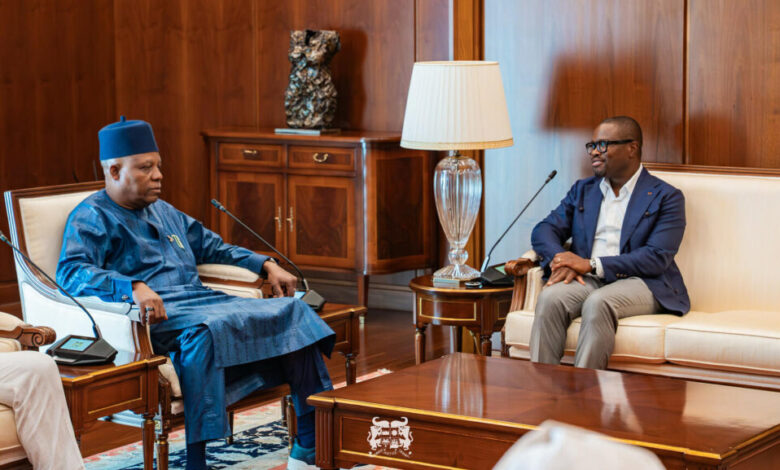
Nigerian Vice President Kashim Shettima paid a working visit to Benin on Friday, where he was received by President Romuald Wadani for talks focused on strengthening bilateral cooperation, with particular emphasis on manufacturing, economic integration and regional security.
At the head of a large delegation that included the governors of Imo, Katsina, Jigawa, Kwara, Plateau and Zamfara states, as well as Nigerian Agriculture Minister Abubakar Kyari and Nigeria’s ambassador to Benin, Mobilola Adeola Ibrahim, on a working visit to Benin, Nigerian Vice President Kashim Shettima also visited the Glo-Djigbe Industrial Zone (GDIZ), which is considered one of the major industrial centers in West Africa.
Benefiting from Benin's experience in developing industrial zones
Following his meeting with Romuald Wadani at Marina Palace, the Nigerian Vice President indicated his country's desire to learn from Benin's experience in developing industrial zones specializing in the processing of agricultural and food products. While Nigeria is currently implementing eight such projects, he cited the results achieved by the Global Industrial Development Zone (GDIZ) as a model for accelerating industrialization in his country.
Shettima also conveyed President Bula Ahmad Tinubu’s greetings to President Romuald Wadani, and highlighted the historical, cultural, economic and humanitarian ties that bind the two neighboring countries.
He said: ”What unites us is far stronger than what can divide us,“ emphasizing the role of Benin and Nigeria as natural partners in building integration in West Africa.
The discussions also addressed security issues. The Nigerian Vice President reaffirmed his country's solidarity in confronting terrorist threats and transnational crime, calling for continued close cooperation between the two countries to maintain regional stability.
This visit comes as a continuation of the rapprochement efforts that began between Cotonou and Abuja following the failed coup attempt of December 7, 2015, in Benin. At the request of the Beninese authorities, Nigeria deployed a military force under the Economic Community of West African States (ECOWAS) mechanism to support security after the Beninese armed forces had contained the rebels. The Beninese authorities explained that this assistance was primarily aimed at preventing further loss of life and destruction, and the Nigerian force withdrew at the end of January 2016.
Beyond security cooperation, Kashim Shettima’s visit reflects the two capitals’ desire to add a new dimension to their strategic partnership by focusing on manufacturing, investment, agricultural transformation, and enhancing economic integration between the two largest economies in the Gulf of Guinea.