How did joint investigations between Nigeria and Washington uncover ISIS financing networks?
The war on terror is moving into banks and currency exchange companies in Nigeria.
Written by: Badr Ahmed
The Nigerian government has affirmed that its financial system will not provide any safe haven for terrorists or those involved in financing them, noting that the sanctions imposed by the United States on Nigerian individuals and companies linked to financing the «Islamic State in West Africa» organization came as a result of intelligence cooperation and joint financial investigations between the two countries.
Nigeria: No safe haven for terrorist financiers
The Nigerian sanctions commission, in a statement released through its Financial Intelligence Unit in the capital Abuja, said the latest US actions reinforce Nigeria’s previous steps against terrorist financing networks and reflect an advanced level of international cooperation to dismantle the financial infrastructure supporting extremist groups.
Nigerian authorities welcomed the decision by the US Office of Foreign Assets Control (OFAC) to include Nigerian citizen Mukhtar Mohammed Adam and a number of his companies and exchange bureaus on the sanctions lists, confirming that these entities were already included in the update to the national sanctions list issued on June 18.
The committee explained that the listing of six individuals and three entities came after extensive intelligence gathering, financial investigations, and joint security assessments, which resulted in reasonable evidence linking them to the «Islamic State in West Africa» organization and allied terrorist networks.
The individuals sanctioned include Ibrahim Yaqub Ugirimah, Mukhtar Mohammed Adam, Adam Shiroma, Ibrahim Abubakar, Abdullah Omar Osman, and Babangida Mohammed Adam Hamajam. The sanctions also targeted three money exchange companies: Abal Baku & Sons Exchange Ltd., Gelatin Currency Exchange Ltd., and Nine to Nine Exchange Ltd.
The Nigerian government has directed financial institutions and relevant non-financial entities to fully comply with the sanctions, including freezing covered assets and reporting any suspicious transactions or matches with data contained in official lists.
The sanctions committee confirmed that several government institutions participated in these efforts, including the Federal Ministry of Justice, the Office of the National Security Adviser, the Central Bank of Nigeria, the State Security Service, the Economic and Financial Crimes Commission, and the Financial Intelligence Unit.
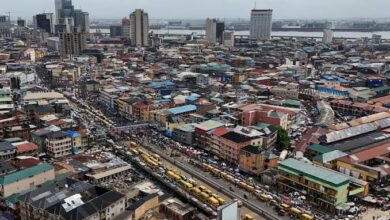
According to Nigerian media, Mukhtar Mohammed Adam, who resides in Lagos, is accused of acting as a financial intermediary for ISIS, by facilitating financial transfers that extended between Europe, the Middle East and West Africa.
Reports indicated that the US sanctions include freezing any assets linked to the United States and preventing any financial transactions with targeted individuals and entities, as part of efforts to dry up sources of funding for terrorist organizations.