Kenya strengthens its healthcare system: New support for 107,000 community health leaders
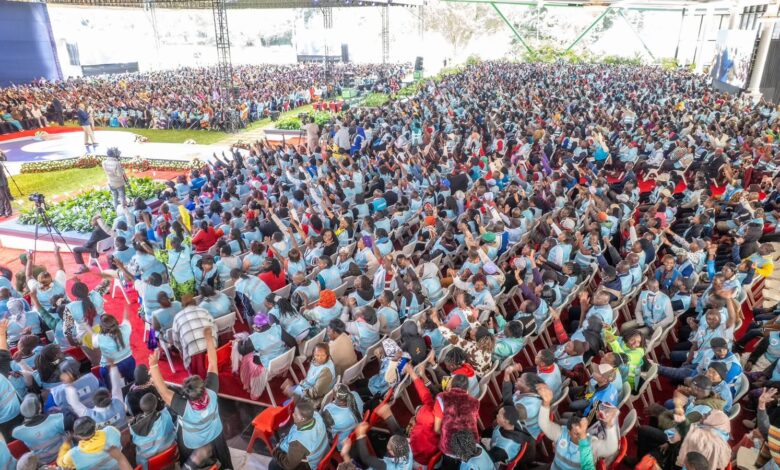
A meeting with approximately 8,000 community health leaders
Written by: Mohamed Ragab
The Presidential Palace in Nairobi hosted a large meeting of about 8,000 Community Health Leaders (CHPs) to discuss their field experiences and achievements in various neighborhoods and districts.
The meeting witnessed the announcement of a package of decisions and direct government support, reinforcing the vital role played by these cadres in building an integrated health system based on prevention and primary care from the family level.
A fundamental pillar of the primary healthcare system
Since the launch of the Community Health Pioneers program in October 2023 and the recruitment of 107,000 health pioneers nationwide, these workers have become an indispensable link between citizens and health institutions.
Their daily tasks focus on conducting basic medical examinations, such as measuring blood pressure and checking for diabetes, and early detection of diseases to facilitate the timely transfer of critical cases to specialized hospitals.
In addition to providing direct medical services, community health leaders play a vital role in educating families. Their field efforts include providing guidance on hygiene, proper nutrition, maternal and child health, and methods of preventing common diseases, thus contributing to improved health and well-being within every household.
A package of government decisions and comprehensive health insurance
In order to accelerate the delivery of universal health coverage, the national government announced the allocation of universal health insurance to all community health pioneers through the Social Health Authority (SHA), at a cost of 390 million Kenyan shillings from the central government, in parallel with a similar contribution from the local governments of the counties.
The support decisions also included providing field workers with modern telephones and advanced medical equipment to improve the efficiency of field work and speed up data documentation.
The figures recorded in the capital, Nairobi, embody the scale of the program's field impact; the team successfully registered more than 810,000 households on the digital platform for community health information, which is equivalent to 541,000 TP3T of the planned target for the district, in addition to carrying out routine visits to more than 766,000 homes.
The team also conducted approximately 2.7 million diabetes screenings, covering 943,000 individuals and resulting in the referral of 30,000 patients to hospitals. Additionally, they performed 2.16 million blood pressure tests, encompassing 743,000 citizens, and referred nearly 50,000 cases for advanced treatment.