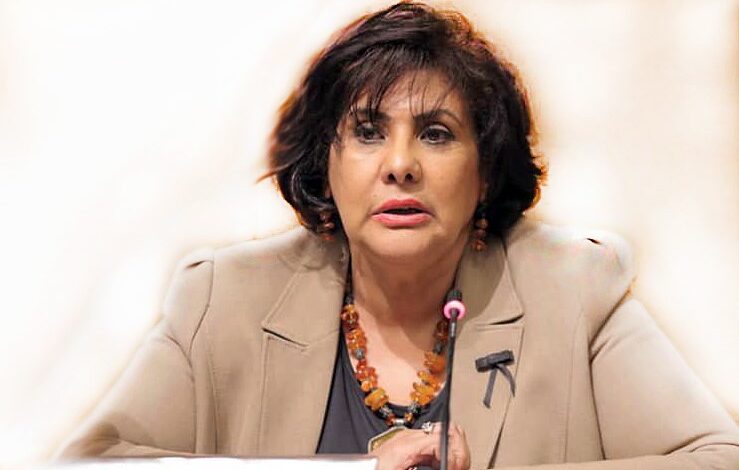
Amani Al-Tawil in an interview with “Zoom Africa News”: The Grand Ethiopian Renaissance Dam (GERD) represents an existential challenge to Egypt’s water security… and Cairo is adopting new alliances to protect its interests on the continent.
Amani Al-Tawil: Sudan, terrorism, and proxy wars are the most prominent threats coming from Africa
Interview by: Badr Ahmed
In recent years, Egypt has continued to reshape its presence within the African continent through a strategy based on expanding political, economic and security partnerships, in parallel with the escalation of international competition in the Red Sea and the Horn of Africa, and the increasing challenges related to water security, terrorism and stability crises in neighboring countries.
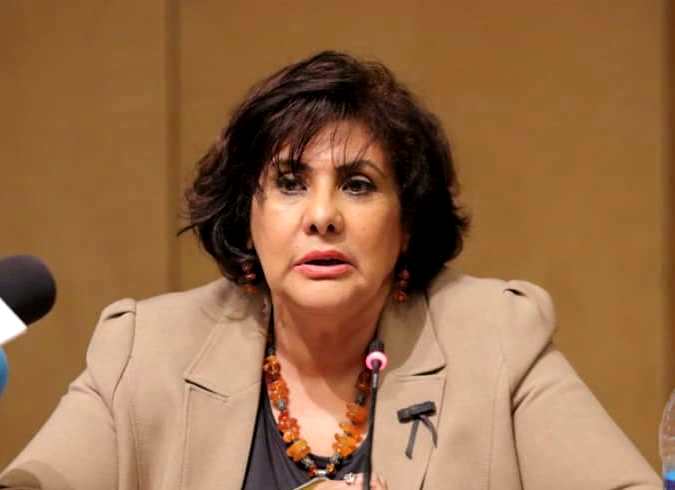
In light of these changes, Zoom Africa News conducted an interview with Dr. Amani Al-Tawil, an expert on African affairs at the Al-Ahram Center for Political and Strategic Studies, to assess the course of Egyptian-African relations, analyze international competition on the continent, discuss developments in the Grand Ethiopian Renaissance Dam (GERD) file, and highlight the most prominent challenges facing Egyptian national security in its African environment.
And now to the text of the dialogue...
How do you assess the course of Egyptian-African relations in recent years? And what are Cairo's most prominent gains in strengthening its presence?
Egyptian-African relations have witnessed a radical transformation in recent years, moving from a reactive or seasonal approach to a more institutionalized and sustainable strategy. Cairo has realized that its African depth is not just a diplomatic issue, but represents a safety valve for Egyptian national security.
Perhaps the most prominent gains for Cairo in strengthening its presence within the continent are represented in the direct military and security positioning; as the Egyptian presence is no longer limited to diplomatic missions, but has recently been translated into very important steps, most notably the announcement of sending Egyptian forces to Somalia to participate in the new African Union Mission to Support Stabilization AUSSOM, in addition to signing military and security cooperation protocols with a number of Nile Basin and Horn of Africa countries, such as Uganda, Kenya, Burundi, and Djibouti.
Cairo also succeeded in formulating an approach based on development in exchange for stability, and presented itself as a development partner through the implementation of giant infrastructure projects by Egyptian companies, most notably the Julius Nyerere Dam project in Tanzania, which contributed to rebuilding trust and dismantling the negative or historical mental image held by some African countries.

How do African countries view the Egyptian role in light of regional and international competition?
African states do not view Egypt as a foreign power, but rather as a pivotal regional player possessing both hard and soft power. However, this African perspective can be divided into two main currents.
The first current sees Egypt as an element of balance and a security guarantee. This vision is clearly evident in countries like Somalia, which rely on Egypt’s military and political weight to protect its unity and sovereignty in the face of regional ambitions and unilateral understandings.
The second current, led by Ethiopia and some of its allies, is wary of Egyptian moves in the Horn of Africa and attempts to portray them as attempts at encirclement or containment. However, Cairo consistently affirms that its partnerships in the region aim to support regional stability, protect Red Sea security and freedom of navigation, and are not directed against any specific country.
How do developments in Somalia, Ethiopia, Eritrea and Djibouti affect Egyptian national security?
The region extending from Somalia and Ethiopia to Eritrea and Djibouti represents Egypt’s security flank, and its effects on Egyptian national security are direct and crucial.
Somalia: It represents the front line of protection for the countries overlooking the Gulf of Aden. Any dismantling of the Somali state or recognition of separatist entities, such as the Ethiopian agreement with Somaliland, or any external moves in the region, threatens the direct stability of the entrance to the Red Sea, which is reflected in Egyptian national security.
Ethiopia: The Renaissance Dam represents an existential challenge to Egypt’s water security, not only through the Renaissance Dam file, but also through its orientation towards regional hegemonic policies, and its pursuit of a sea outlet with a military character, which may disrupt the balance of power in the Horn of Africa region.
As for Eritrea and Djibouti, they represent an important logistical and geopolitical depth, as the Egyptian presence and building partnerships with them, along with developing ports and turning them into green ports, aims to prevent the emergence of hostile fronts that could affect the movement of navigation heading to the Suez Canal.
What impact will international competition in the Red Sea and the Horn of Africa have on Egyptian interests? Will the region turn into a wider regional conflict arena?
Yes, the region has already turned into a miniature international and regional conflict arena, and there is a real possibility that this conflict will expand during the next phase.
The most prominent manifestation of this competition is the militarization of the Red Sea, and the increasing number of foreign military bases – American, Chinese, French and Turkish – in and around Djibouti, which reduces the strategic margin for free Egyptian movement.
Egyptian interests are directly affected because any security disturbance in the Bab el-Mandeb Strait immediately impacts maritime traffic and Suez Canal revenues, which in turn affects one of the most important sources of national income. Therefore, Egyptian diplomacy maintains its position rejecting the presence of bases or military forces from countries that do not border the Red Sea.
What are the most prominent challenges currently facing the African continent?
The African continent is going through a period of security and political instability, and faces a range of overlapping challenges, most notably:
The crisis of governance and military coups, especially in the Sahel and West Africa, and the resulting decline of the concept of the nation-state.
Transnational terrorism, with the expansion of organizations such as ISIS, Al-Qaeda and Al-Shabaab in the east and west of the continent.
Climate change and food security, in light of the waves of drought and floods that hit the Nile Basin and the Horn of Africa, and the resulting waves of displacement and illegal migration.
The sovereign debt crisis is limiting the ability of many African countries to achieve sustainable development and economic independence.
What are the implications of the growing Russian, Chinese and Turkish influence in Africa?
The growing Russian, Chinese and Turkish influence represents a reshaping of the geopolitical landscape in Africa, and an end to the traditional Western monopoly on the continent.
China focuses on development diplomacy, through loans, investments and infrastructure projects, while Egypt benefits from this trend by integrating Egyptian ports and African corridors into the Belt and Road Initiative.
As for Russia, it is focusing more on security and military cooperation, through the military groups that were known as Wagner, and are now operating under the name of the African Legion, which has changed the equations of influence in the Sahel region and Libya, and requires continuous Egyptian coordination to control the borders and protect strategic interests.
In contrast, Türkiye combines soft power, through the economy, investment, education and drama, with hard power, through military bases and drones.
What has been noticeable recently is the positive shift in Egyptian-Turkish relations, as the competition over the Horn of Africa, Somalia, and Libya has moved to a level of coordination and strategic rapprochement, serving the interests of both countries and reducing the chances of direct confrontation.
How can Egypt benefit from the African Continental Free Trade Agreement?
The African Continental Free Trade Agreement represents a golden gateway for Egypt to break free from the constraints of traditional markets and enhance its economic presence within the continent.
The benefits of the agreement will be realized by transforming Egypt into an industrial and logistical hub that exports products of Egyptian origin and technological installations to African markets, taking advantage of the customs exemptions provided by the agreement.
This also requires utilizing geographical connectivity projects, most notably the Cairo-Cape Town road project, to facilitate the movement of trade and goods between the north and south of the continent.
Likewise, focus should be placed on industries in which Egypt has a competitive advantage, such as pharmaceutical, food, and building materials industries, which will contribute to increasing Egyptian exports and enhancing economic influence within the continent.
How do you assess the developments in the Grand Ethiopian Renaissance Dam (GERD) file at the present time, especially in light of US President Donald Trump's repeated statements about the injustice done to Egypt regarding the GERD, and what options are available to Cairo?
I believe that the Grand Ethiopian Renaissance Dam (GERD) file is currently going through a phase of deliberate negotiation stalemate on the Egyptian side, after Cairo made a clear decision to stop what it described as futile negotiations since the end of 2023, after it became convinced that Addis Ababa had used the negotiation process as a cover to impose a fait accompli.
As for the statements of US President Donald Trump, he returned to explicitly confirm that the Renaissance Dam has harmed Egypt and reduced the flow of water to it, and he recently proposed a new American mediation to reach a comprehensive agreement.
In my view, these statements provide international political backing for the Egyptian position, and confirm the fairness of the Egyptian demands.
However, Egypt does not reject international mediation in principle, but it stipulates that the negotiations must be serious, defined by a clear timeframe, and that they must result in a legally binding agreement that regulates the filling and operation processes, especially during periods of drought, while reassuring public opinion that the current stock in Lake Nasser is reassuring, as a result of the wise management of water resources.
Regarding the options available to Egypt during the current phase, they consist of several parallel paths, most notably:
The strategic field option: This involves adopting a policy of rough balance, through a military presence in Somalia, and building regional alliances around Ethiopia, which sends a clear deterrent message that any infringement on Egyptian water security will have a high strategic cost in areas of Ethiopian influence.
The diplomatic option: by internationalizing the crisis and leveraging international support, whether through the United States or friendly powers, to exert political and economic pressure on Addis Ababa.
The internal option: This involves continuing to implement water recycling projects, lining canals, and expanding water desalination plants, with the aim of reducing the water deficit and securing the country’s future needs.
What are the most prominent threats coming from the African interior that Egypt must take into account?
In my estimation, the Egyptian decision-maker should place a set of threats at the forefront of his priorities during the next phase, as they directly affect Egyptian national security, the most prominent of which are:
The unraveling of the nation-state in the strategic neighboring countries, most notably Sudan, where the ongoing civil war is leading to large influxes of refugees, as well as security repercussions on Egypt’s southern borders.
The activity of hybrid terrorist groups, which combine traditional terrorism with organized smuggling networks, whether smuggling weapons, people or drugs, across the Sahara and the western and southern borders, has increased.
Proxy wars, through the use of African issues by some regional and international powers as a pressure tactic against Egypt, with the aim of exhausting it or distracting it from other regional issues, such as Gaza, Libya, the Red Sea, and Bab al-Mandab.
What is the importance of economic diplomacy in enhancing Egyptian influence within the continent?
Economic diplomacy is the real fuel for sustaining any political influence within Africa.
Military and security forces are capable of protecting interests, but shared economic interests are the true guarantor of continued influence and enhanced Egyptian acceptance among African countries.
If African countries do not feel that the Egyptian presence directly impacts their economic development, job creation for their people, and capacity building, then this influence will remain limited and temporary.
Hence, electrical interconnection projects, the establishment of Egyptian industrial zones within Africa, the export of technical expertise, along with the promotion of cultural, artistic and research cooperation, all represent effective tools that Cairo possesses to enhance its positive image within the continent, and to thwart any regional or international attempts to distance it from its African surroundings.