A person breaches the security cordon of the Kenyan president... What is happening inside the presidential protection team in Kenya?
A man breaches the security cordon around the Kenyan president.
Written by: Mohammed Omran
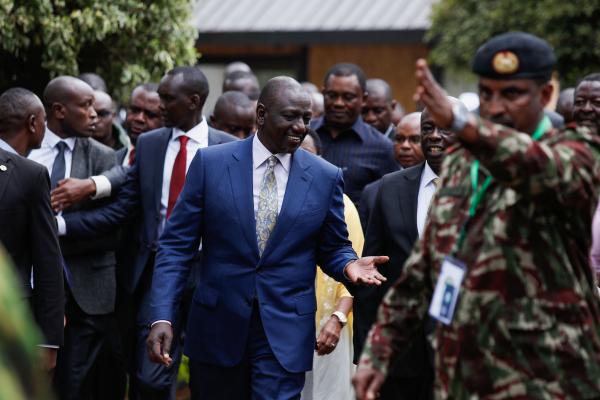
The security breach incident that occurred Kenyan President William Ruto, during a public event in the Pampa area of Kilifi County, raised questions about the effectiveness of the country's presidential protection system, after someone managed to get close to the president while he was giving a speech to a crowd of citizens.
A man breaches the security cordon around the Kenyan president.
While authorities rushed to open investigations and enact urgent reforms within the presidential protection team, the incident highlighted a series of similar incidents that have raised growing concerns in recent months about security preparedness and field coordination during the president's public appearances.

With increasing pressure to balance the president's openness to citizens with the demands of tight security, the Kilifi incident appears to be a turning point that could prompt a comprehensive reassessment of presidential protection protocols in Kenya.
Security breach throws Kenya into disarray
Kenya's Inspector General of Police, Douglas Kanga, has ordered sweeping changes within the presidential protection team, following a new security breach in the Bamba area of Kilifi County, where a person managed to get close to President William Ruto while he was giving a public speech.
Kanga also decided to form a special investigation team to uncover the circumstances of the incident, stressing that the security of the head of state is a top priority, especially in light of mistakes that may affect national security.
This is not the first time that security concerns have been raised during President Ruto's public engagements, but the Pamba incident appeared to many to have crossed a very sensitive security line.
UDA coalition secretary-general Omar said his remarks were about the injustice done to the Sahel region, not about division, as he offered an apology. Suddenly, a man broke through the crowd and rushed towards the head of state while he was giving his speech in Bamba, Kilifi province, briefly bypassing the tight security cordon before security personnel intervened and stopped him.
The incident was followed by chaos, with tensions rising between security personnel at the scene, while onlookers closely watched the event.
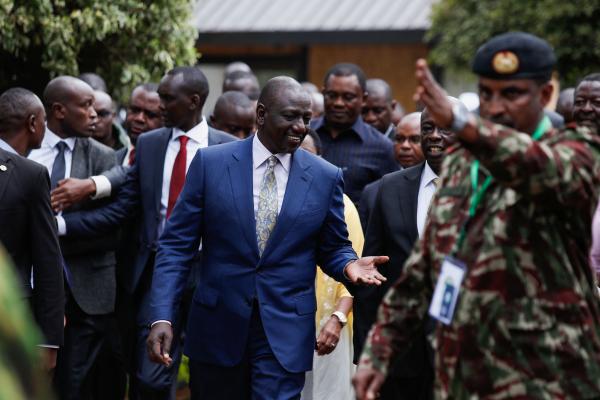
For some Kenyans, presidential tours have become an opportunity to directly express their suffering and living conditions, as some citizens seek to meet the president personally to draw attention to their issues, sometimes risking bypassing security measures to achieve this.
The recent breach revealed gaps in the level of preparedness, coordination, and speed of response within the security team close to the president during public events.
It is no longer seen as an isolated incident, but rather as a worrying pattern within the country's top security apparatus and elite presidential protection unit.
In recent months, several incidents related to the president's public appearances have revealed recurring security lapses, with some people being intercepted moments before they got dangerously close to the president.
The confusion within the security unit also came to light on May 22, when the commander of the presidential guard unit, Noah Mayo, was filmed apparently confronting a police officer and even trying to seize his weapon, before Mining Minister Hassan Joho intervened to quickly contain the situation.
The recent incident has reopened the debate on crowd management, intelligence coordination, and how to balance giving citizens the opportunity to connect with the president while ensuring his safety.
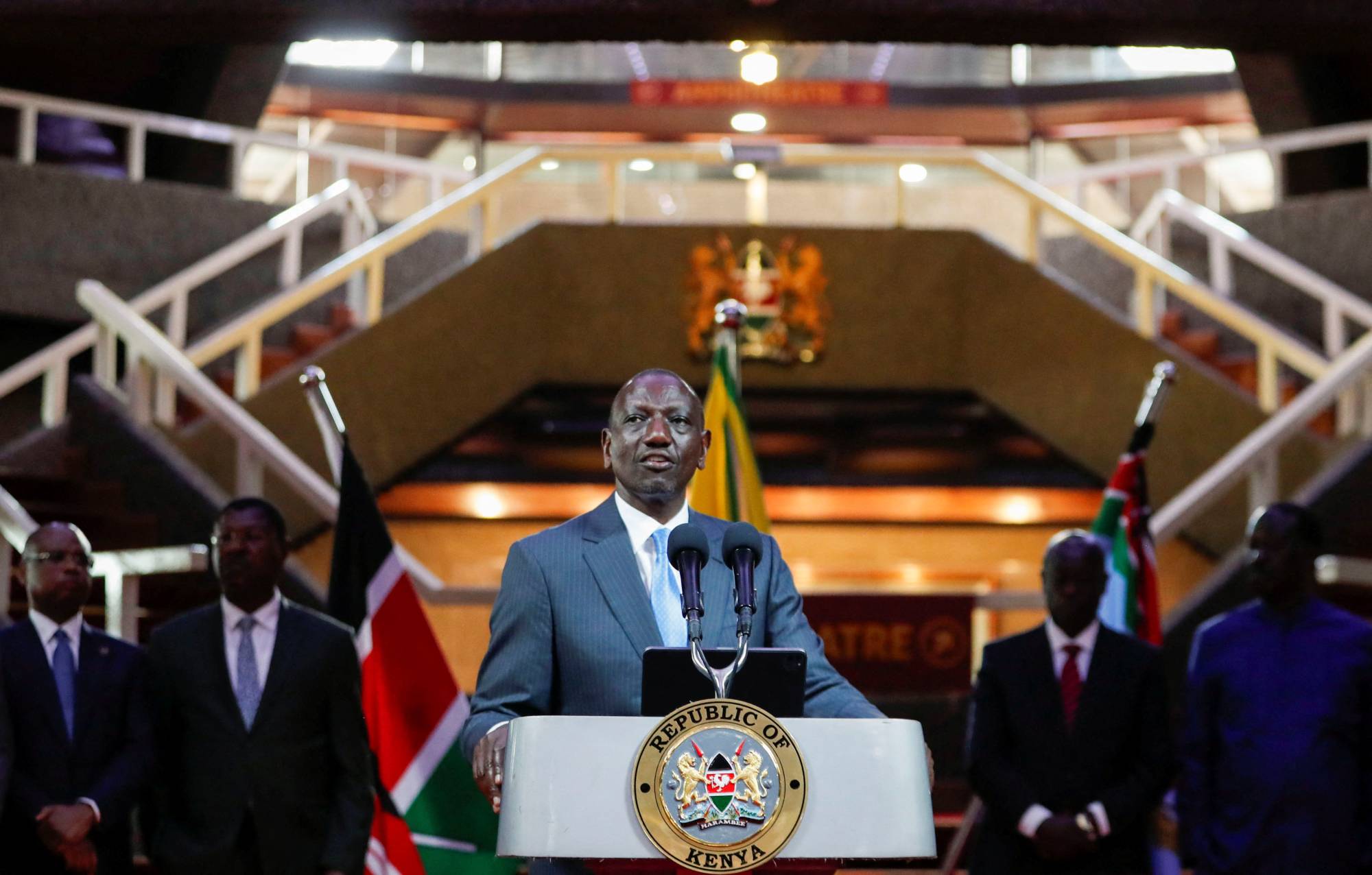
Police Inspector General Douglas Kanga ordered sweeping changes within the presidential protection team to strengthen security protocols and close existing gaps.
He stressed that the security of the head of state is a national security issue and will be dealt with with the utmost seriousness.
Kanga said: “I have ordered immediate changes to the security team responsible for protecting the president. The security of the head of state is a matter of national security and will be treated with the utmost seriousness.”.
The Inspector General also announced the formation of a special unit to investigate how the security breach occurred and to take the necessary measures to prevent the recurrence of such incidents in the future.