Is Al-Qaeda close to establishing a parallel entity on the coast?
Al-Qaeda in the Sahel
Written by: Ayman Ragab
American warnings that the al-Qaeda-linked group “Jama’at Nusrat al-Islam wal-Muslimin” (JNIM) is close to possessing the characteristics of a state-like entity in the Sahel region have raised increasing concerns about the future of security and stability in West Africa, particularly in Mali, which is facing escalating pressure from armed groups seeking to expand their influence and get closer to the capital, Bamako.
These warnings come at a time when the group is witnessing a significant expansion in its areas of influence within Mali, Burkina Faso and Niger, with its growing ability to disrupt vital supply lines and impose control over large areas of territory.
In this context, the commander of the US Africa Command (AFRICOM), General Dagvin Anderson, warned that the fall of a regional capital into the hands of the group could give it unprecedented resources and capabilities, enhancing its power and giving it a political symbolism similar to states.
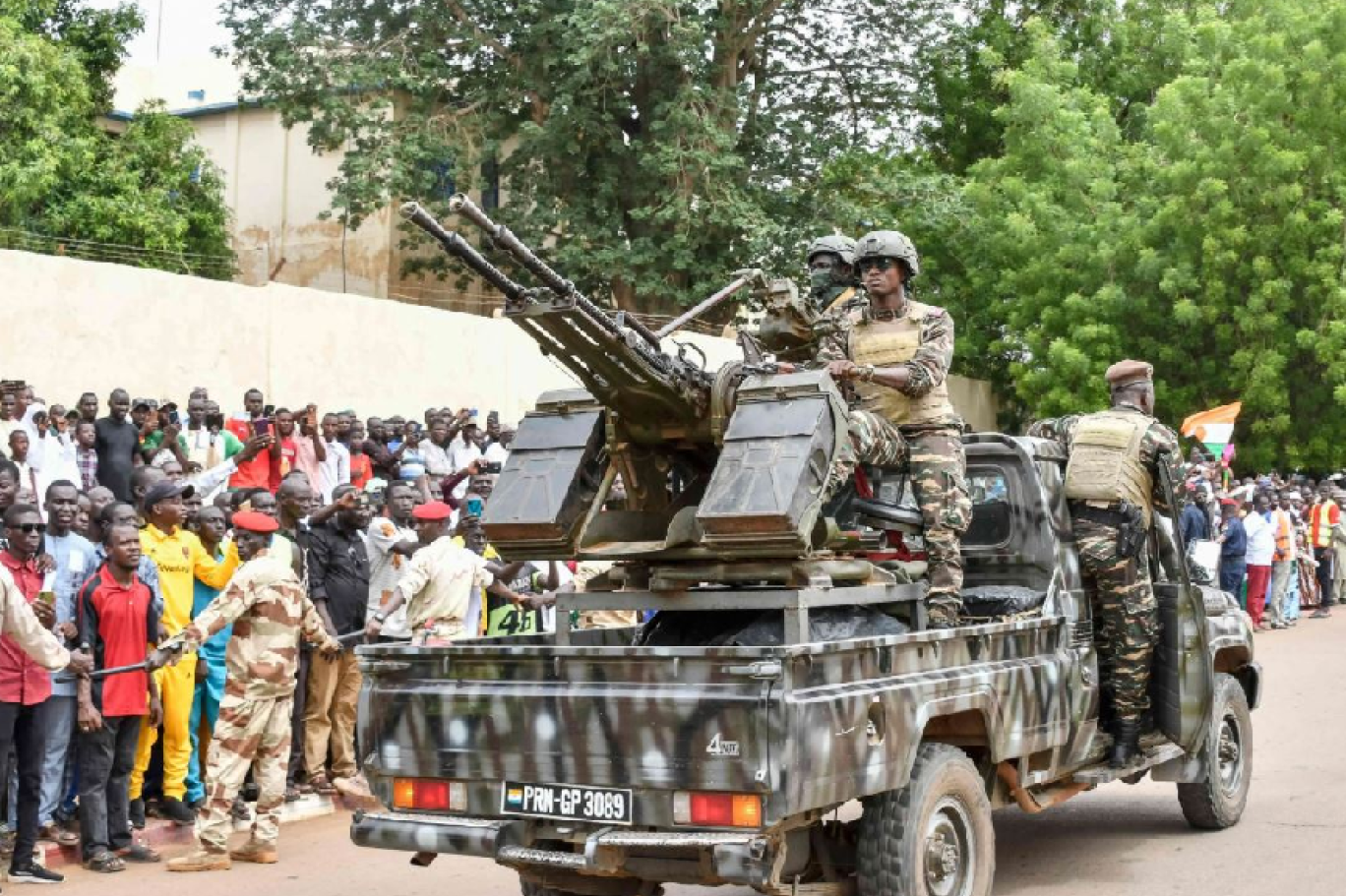
Analysts believe that these warnings reflect an unprecedented escalation in the capabilities of the “Jama’at Nusrat al-Islam wal-Muslimin” group, warning that the continuation of this path may lead to the consolidation of the “parallel state” model in areas outside the control of governments, which will have serious repercussions for the security of West Africa and European interests, as well as increasing the risks of terrorism, irregular migration and transnational organized crime.
Mounting pressure on Bamako
The Malian capital, Bamako, is experiencing a tense security situation, amid accusations that the “Support for Islam and Muslims” group is coordinating with the “Azawad Liberation Front” to try to tighten the noose around the Malian state and expand the scope of its military operations, in one of the most serious challenges facing the authority since the military came to power.
The escalation has increased in recent days after the group announced a financial reward of two million euros for information leading to the head of the transitional phase, General Assimi Goïta, just one week after the Malian government announced rewards of millions of dollars for information that helps in the capture of the group’s leader, Iyad Ag Ghali, and a number of its most prominent leaders.
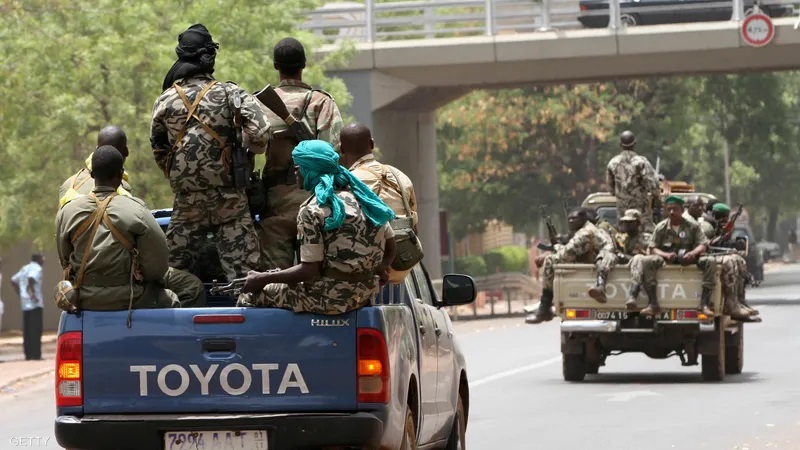
These developments come in the wake of attacks claimed by the organization last April, which demonstrated its ability to carry out high-quality operations and target sensitive sites, in an attempt to prove that it has the ability to threaten the center of power in the country, taking advantage of the fragile security situation and the wide scope of its activity in northern and central Mali.
During his testimony before the U.S. House Armed Services Committee, General Anderson confirmed that the group had succeeded in developing effective tactics to cut off fuel supplies, disrupt vital transportation routes, and isolate major population centers, giving it strategic leverage over local governments.
He described terrorism as the most serious security threat in Africa, noting that West Africa has become the global center of gravity for jihadist movements, having recorded more than half of all terrorism-related deaths worldwide in 2024.
He added that the group has expanded its influence in Mali, Burkina Faso and Niger, and is exerting increasing pressure on cities and strategic centers, warning that the danger lies not only in its military expansion, but also in the possibility of its success in controlling a capital or major urban center that would give it the resources, capabilities and political symbolism that states possess.
Warning to the world
French academic and professor of international relations, Frank Farnel, considered that the warnings of the AFRICOM commander warranted global attention, stressing that the group had gone beyond the stage of traditional insurgency, and was now setting up checkpoints on the roads leading to Bamako, cutting off fuel supplies and disrupting vital transport arteries, and even threatening the capital of a sovereign state.
He pointed out that the rise of the group is due to several factors, most notably the governance vacuum in the Sahel countries, the inability of the military regimes in Mali, Burkina Faso and Niger to extend state control outside the capitals, in addition to chronic poverty, ethnic marginalization and the collapse of livelihoods, which are factors that have contributed to providing a fertile environment for recruitment.
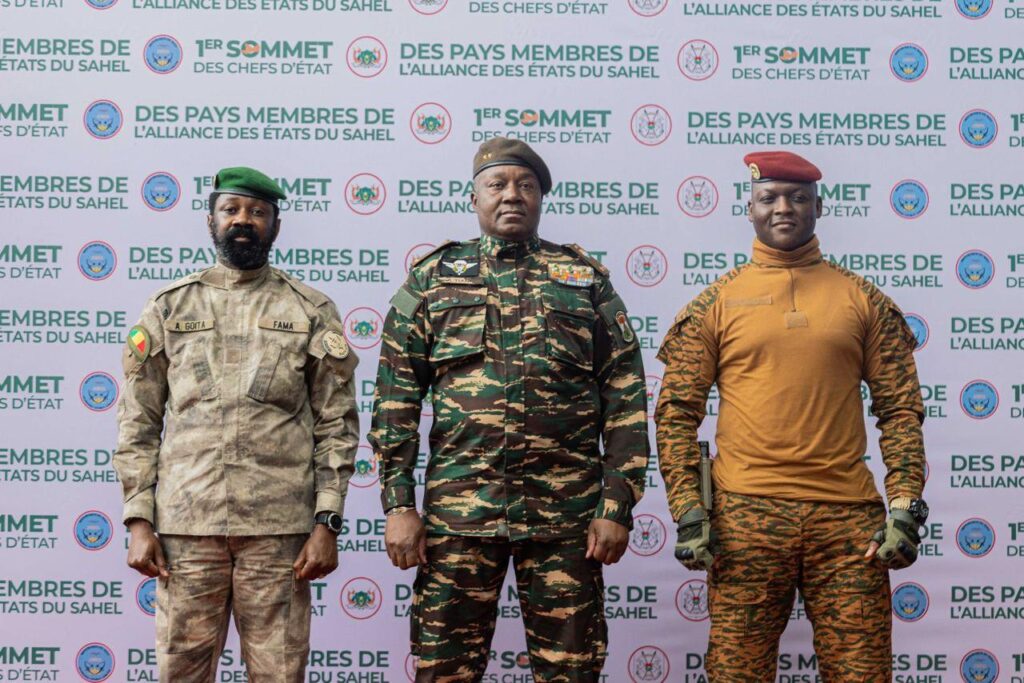
He added that the group has strengthened its resources by merging with transnational organized crime networks, especially drug trafficking networks, warning that establishing quasi-international control over large areas of Mali would represent one of the biggest regional gains made by an al-Qaeda affiliate in recent years, and could encourage other groups to replicate the experience.
He explained that the reduction of the French military presence does not mean that Paris has lost all its tools of influence, as it still possesses a vast intelligence network built over years of involvement in the region.
The dangers of a “parallel state”
For his part, Scott Morgan, an American researcher specializing in national security affairs, said that AFRICOM’s warnings reflect the growing threat posed by the “Support for Islam and Muslims” group, after it acquired advanced capabilities and resources that help it expand its operations and strengthen its influence.
He explained that the success of armed groups is linked to the extent to which the state is able to manage its affairs and meet the needs of its citizens, noting that the inability of governments to provide basic services creates a vacuum that these groups exploit to consolidate their influence and gain local support.
He added that the recent attempt to target senior leaders in Mali confirms that the group possesses capabilities exceeding those of traditional armed organizations, both in terms of armament and securing logistical resources. He warned that its success in exploiting the economic resources in the areas it controls and converting them into stable sources of funding will grant it greater capacity for expansion. (Sky News)