South Sudan and the United Nations reaffirm their commitment to promoting peace.
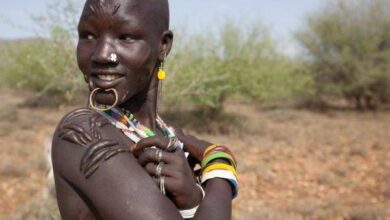
73,000 people are facing a catastrophic level of food insecurity.
Written by Ziad Abdel Fattah:
In a meeting that represents a significant step towards strengthening cooperation between the Government of South Sudan and the United Nations, both sides reaffirmed their shared commitment to enhancing peace And stability in South Sudan.
Around 7.9 million people, nearly two-thirds of South Sudan's population, are at risk of soon falling into severe food insecurity Famine is looming in South Sudan, authorities have previously reported, amid escalating fighting between government and opposition forces.
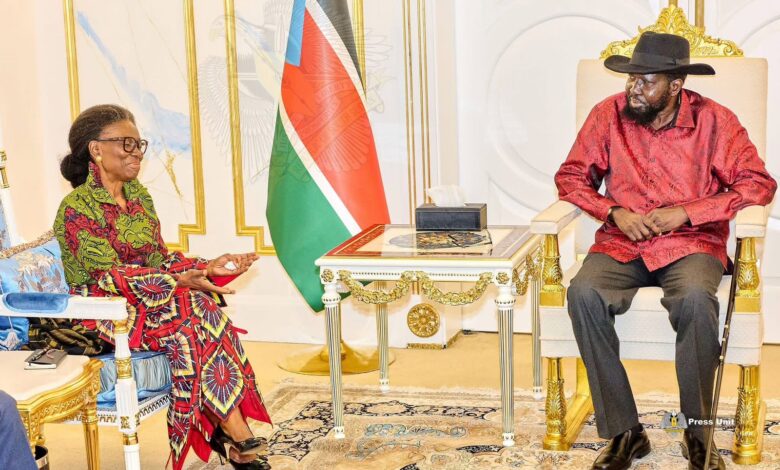
On Wednesday, President Salva Kiir Mayardit held talks with the newly appointed head of the United Nations Mission in South Sudan (UNMISS), Anita Kiki Gbeho, focusing on strengthening cooperation between the government and the United Nations.
South Sudan reaffirms its commitment to working with the United Nations
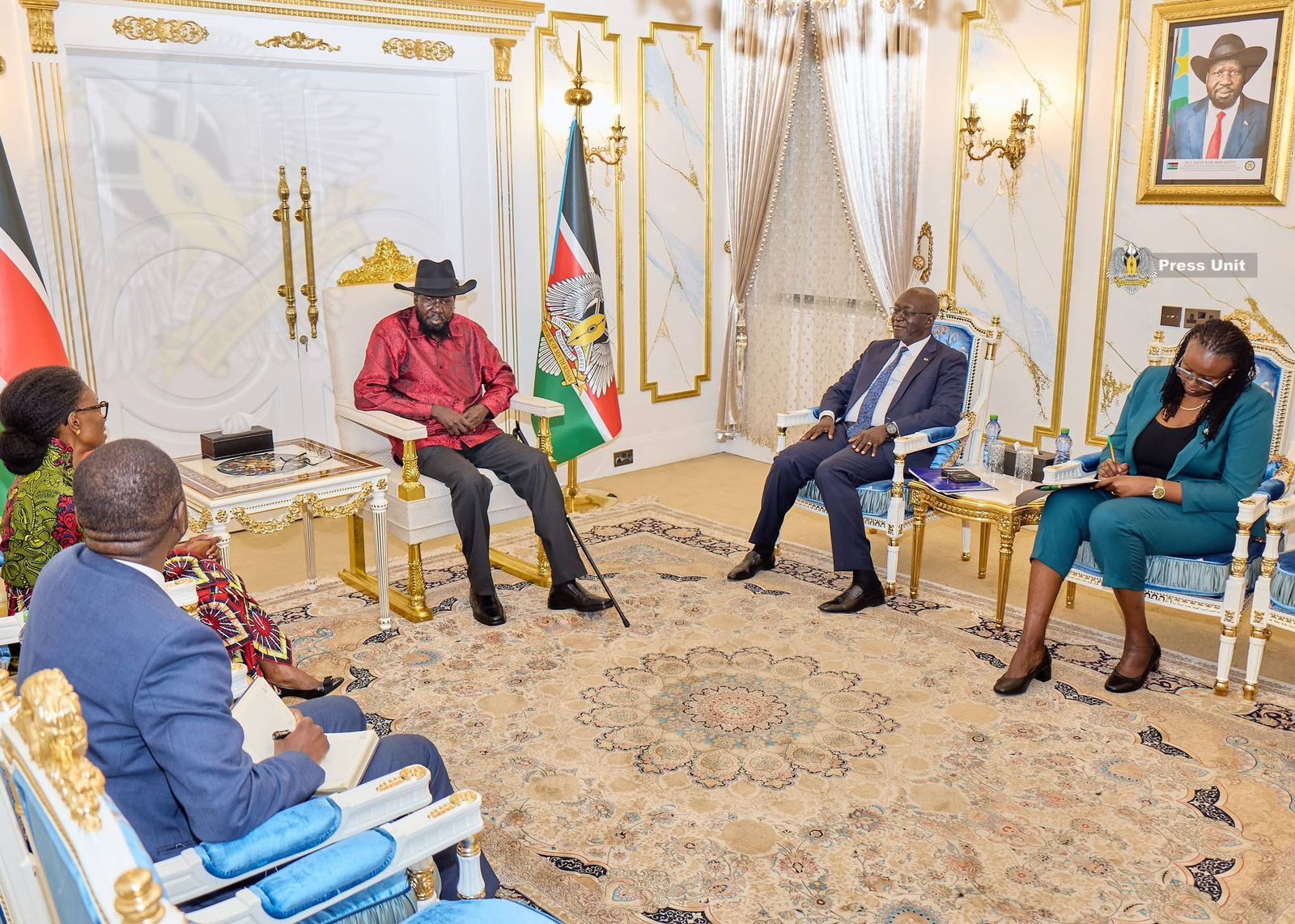
President Kiir welcomed the new head of the United Nations mission in South Sudan and affirmed the government's commitment to working closely with the United Nations to support peace, stability, and the provision of services to the people of South Sudan.
Earlier, the South Sudanese government accused aircraft operating under contracts with the United Nations Mission in South Sudan (UNMISS) of involvement in smuggling natural resources and installing undeclared surveillance equipment. Authorities had previously detained four aircraft linked to UNMISS following intelligence information obtained by the relevant agencies. Two of these aircraft were involved in smuggling natural resources, most notably sandalwood, between South Sudan and Sudan.
Gbeho briefed the President on the role of the United Nations Mission in South Sudan (UNMISS), which includes supporting the peace process, protecting civilians, and helping to create the conditions necessary for lasting stability, and expressed her readiness to work “in partnership and trust” with the government to achieve these goals.
In the same context, President Kiir indicated that her appointment was based on an existing relationship, saying: “We are not starting from scratch. We have known you and seen your work, and we welcome you.” He assured her of his full support, adding: “We are here to work side by side, and South Sudan is fully prepared to ensure that things move forward.”.
Last Wednesday, the UN Security Council held a closed-door consultation session to discuss the situation of UN peacekeeping operations in South Sudan, at the request of Denmark and Pakistan, amid a worsening liquidity crisis facing the international organization.
UNMISS mission in South Sudan extended for one year
On Thursday, April 30, 2026, the Council adopted a resolution to extend the mandate of the United Nations Mission in the Republic of South Sudan (UNMISS) for a full additional year. The resolution was supported by 13 countries, while Russia and China chose to abstain from voting, reflecting the divergence of international views on the strategy for dealing with the security situation in the world’s newest country as we enter May 2026.
The new UN resolution included a fundamental shift in the size of the military force deployed on the ground, as it was decided to reduce the upper limit of the forces to match the available budgets and the reality on the ground.
South Sudan enters a drought season
South Sudan, with a population of over 12 million, enters its lean season between April and July. According to the United Nations, some 73,000 people are expected to face a catastrophic level of food insecurity, with severe food shortages, an increase of 1,601,000 compared to last year.