“TikTok: Boko Haram's new weapon that is troubling Nigeria
TikTok in the hands of Boko Haram

Written by: Ayman Ragab
A week after a Boko Haram faction led by Sadiqou killed and abducted more than 170 women and children from Wuro in Kayama, Kwara State, the terrorist group posted a video on TikTok mocking the government and accusing it of “deception and betrayal” for downplaying the number of abducted victims.
The 90-second video was shared on the Chinese-owned social media platform by someone known as Abu Muhammad Aba, a pseudonym that may be real but is most likely a pseudonym, as is common in jihadist circles.
TikTok in the hands of Boko Haram
After the video went viral in February, both the video and the account disappeared from the platform, suggesting the account may have been deactivated or the content deleted. However, a recent investigation revealed that the account, likely created in 2025, has resumed posting propaganda messages and speeches by jihadist ideologues, including the late founder of Boko Haram, Mohammed Yusuf.
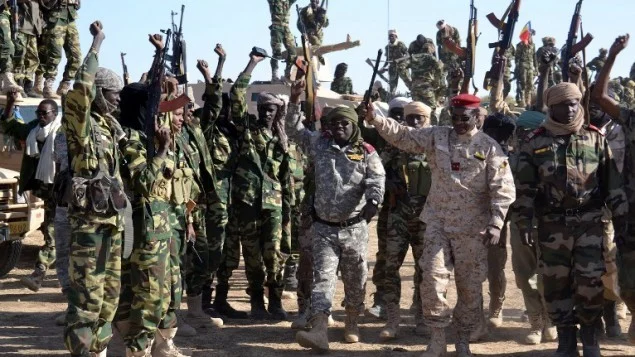
The message was not mere propaganda. Rather, it reflected a growing global challenge in which extremist groups exploit digital platforms and weaknesses in digital governance systems to communicate, spread propaganda, recruit followers, and extend their influence beyond the physical battlefield.
At the heart of this challenge lies the public digital infrastructure (PDI), the underlying systems that enable governments and citizens to interact securely and effectively through digital identity, payments, data exchange, and trusted communications. While PDI is often discussed in the context of financial inclusion, service delivery, and economic development, security experts are increasingly emphasizing that it is also becoming a critical component of national security.
As governments digitize public services and expand connectivity, extremist groups have become more adept at exploiting the same digital system to influence the masses, spread narratives, and evade traditional security responses.
But the video posted by TikTok showing the victims of the Wuru kidnapping was not just a publicity stunt; it highlighted how terrorism itself has evolved in the digital age.
Global digital battleground
The exploitation of social media by extremist groups is not unique to Nigeria.
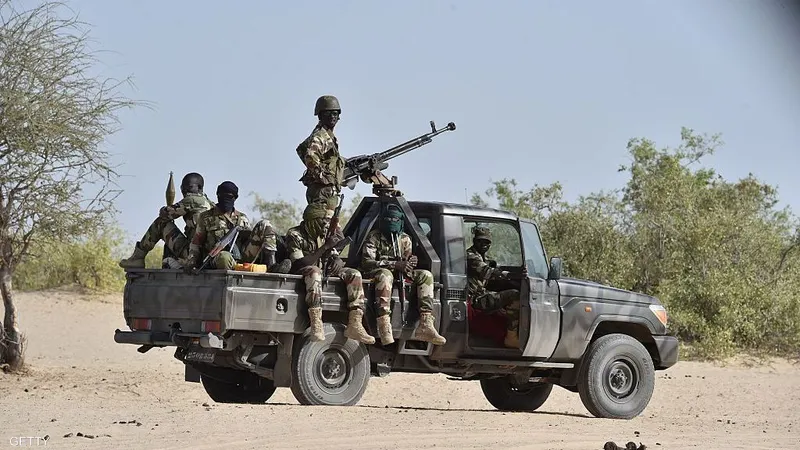
From the Islamic State’s sophisticated media machines to al-Qaeda’s Telegram channels and violent far-right networks operating across Europe and North America, terrorist organizations have turned digital platforms into strategic assets, according to the Geneva Centre for Security Policy (GCSP).
What were originally communication tools have become part of the infrastructure used by extremist groups to recruit followers, spread propaganda, coordinate activities, raise funds, and shape public opinion.
Malik Samuel, a security analyst and senior researcher at the Good Governance in Africa (GGA) organization, said: “War is no longer limited to weapons and bullets, but has now become more of an information war than a war in the literal sense.”.
Governments around the world have spent years trying to adapt to this reality.
In West Africa, where Islamic State and al-Qaeda affiliates are wreaking havoc in the Sahel and Lake Chad Basin, regional efforts such as the Multinational Joint Task Force and the Economic Community of West African States’ Counter-Terrorism Coordination Unit have focused heavily on intelligence sharing, military cooperation, and counter-terrorism operations on the ground.
In Europe and North America, security agencies are increasingly viewing online propaganda not just as harmful content, but as part of a broader ecosystem capable of facilitating recruitment, radicalization, and operational coordination.

One of the most prominent examples emerged in Europe, where coordinated operations led by Europol successfully dismantled key elements of the Islamic State's online propaganda infrastructure. Rather than focusing solely on individual posts or accounts, investigators targeted the servers, websites, applications, and communication systems that enabled extremist content to spread globally.
The rise of TikTok
These efforts have pushed many extremist organizations away from mainstream platforms and into more obscure digital spaces, particularly encrypted Telegram channels, where propaganda networks supported by automated accounts and sympathizers continue to operate.
But the rise of TikTok has created new opportunities.
Since TikTok’s rapid global expansion, researchers and law enforcement agencies have documented how extremists exploit the platform’s recommendation-based ecosystem to amplify propaganda and expand their reach.
A report by the Institute for Strategic Dialogue (ISD), titled “TikTok Caliphate,” revealed an active network of at least 20 TikTok accounts supporting the Islamic State, which collectively garnered over one million views. Similarly, Europol documented the presence of violent terrorist and extremist content on the platform.
In September 2023, Europol’s European Counter Terrorism Centre (ECTC) and TikTok coordinated a multinational operation involving 11 countries, which identified more than 2,100 suspected terrorist and violent extremist materials, including material linked to jihadist and violent far-right networks.
What distinguishes many Western responses is not the absence of extremist content, but rather the presence of specialized institutions designed to continuously monitor, analyze, and disrupt terrorist ecosystems online.
The experience of organizing the state
For example, Europol’s European Union Online Referral Unit (IRU), created in 2015, serves as a permanent capability that tracks extremist propaganda, supports online investigations, works with technology companies to facilitate content removal, and maintains databases used in criminal investigations and prosecutions.
In June 2024, Europol, in cooperation with Eurojust and US authorities, dismantled the electronic infrastructure supporting several Islamic State media outlets, shutting down servers used to distribute propaganda and operational messages in at least 30 languages.
The operation demonstrated how modern counterterrorism increasingly focuses not only on monitoring content, but also on disrupting the digital infrastructure that supports extremist networks.