Mali under fire: Army asserts control after coordinated attacks in Bamako and major cities
Coordinated attacks targeted military sites and barracks
Written by Amina Hassan
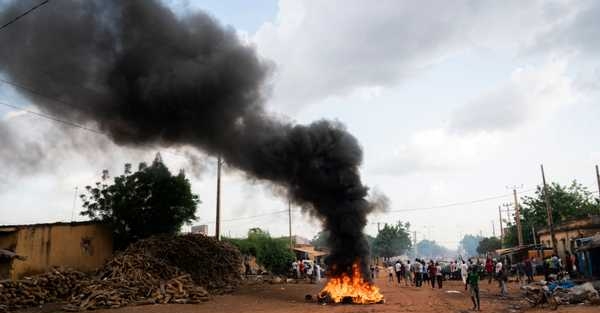
Witnessed Bamako On Saturday, April 25, armed clashes erupted following coordinated attacks targeting military sites and barracks in the capital and other parts of the country, before the Malian army announced it had regained control of the sites that were attacked.
A military statement confirmed that "armed terrorist groups" carried out the attacks simultaneously, without revealing their identity, while clashes continued for hours in some areas.
Gunfire near airport and airbase
The sounds of heavy weapons and automatic rifles echoed around the airport in Modibo Keita The international airport, located about 15 kilometers from the center of the capital, is adjacent to an airbase used by the Malian Air Force.
A military helicopter was seen flying over the nearby suburbs as part of aerial reconnaissance and surveillance operations, while witnesses reported hearing sporadic gunfire since the early morning hours.
Katie, Gao, and Safari were among the targets of the attacks.
The clashes have spread to the city of Kati, near the capital, where the residence of the head of the military council, General Assimi Goita, is located.
Gunfire was also heard in Gao in the north and Sévaré in the center of the country, reflecting the wide-ranging and geographically coordinated nature of the attacks. No group has yet claimed responsibility for these operations.
A complex security context for more than a decade
For more than ten years, Mali has been living under the shadow of rebellions and acts of violence carried out by groups linked to al-Qaeda and ISIS, in a fragile security environment where local and regional factors intersect.
These developments come under military rule that began after two coups in 2020 and 2021, with the return to civilian rule continuing to be postponed.
Alliance shifts from Paris to Moscow
Bamako has witnessed a remarkable shift in its foreign alliances, moving away from its Western partners, most notably France, and towards closer political and military cooperation with Russia.
The Wagner Group had been supporting the authorities since 2021, before announcing in June 2025 the end of its mission and its transformation into an entity directly under the Russian Ministry of Defense.
A closed political scene and a postponement of the civilian transition
Domestically, the authorities took strict measures that included dissolving political parties and organizations and restricting press activity.
Despite the military council's pledge to hand over power to civilians by March 2024, this did not happen, and in July 2025, Goeta was granted a five-year presidency renewable "as many times as necessary" without elections, deepening the controversy over the country's political path.