The death of an infant from Ebola in the Democratic Republic of Congo highlights the worsening humanitarian crisis.
The Red Crescent participates in the burial of a child who died from the virus
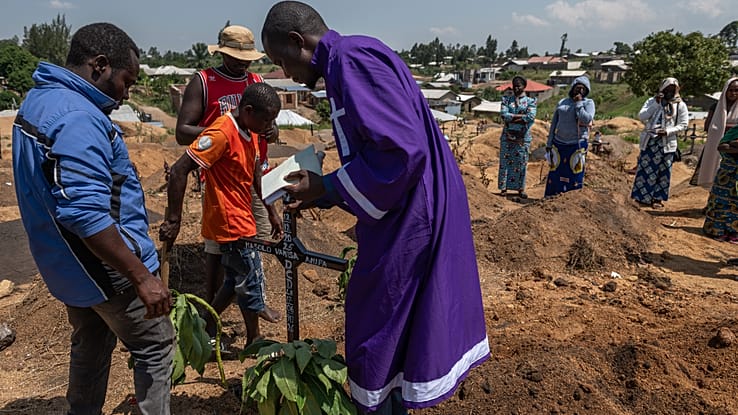
The death of a six-month-old baby from Ebola in the Democratic Republic of Congo has once again highlighted the worsening humanitarian consequences of the outbreak, as infection and death rates continue to rise and the country's health system is under increasing pressure.
Red Cross volunteers participated in the child’s burial ceremony, following approved health procedures to prevent the spread of infection, in a scene that reflects the extent of the suffering experienced by families affected by the pandemic, especially with the continued recording of new infections in a number of affected areas.
Safe burial procedures to reduce the spread of infection
Red Cross teams and health authorities follow strict protocols during the burial of Ebola victims, as the bodies of the deceased can be a source of infection if not handled according to approved health procedures.
Volunteers are working to carry out safe burials while taking into account humanitarian aspects and respecting local traditions, at a time when families are facing significant psychological difficulties as a result of restrictions imposed on traditional burial ceremonies.
Humanitarian teams confirmed that these measures aim to protect local communities and reduce the spread of the disease, especially in areas with high infection rates.
Children are among the most vulnerable groups
The infant's death highlights the risks that the Ebola outbreak poses to children and families, with health workers emphasizing that the virus does not discriminate between age groups, and that children remain among the most vulnerable to serious health complications.
Many families face significant challenges in accessing health services, especially in remote areas or those affected by security conditions, which makes it more difficult to detect infections early and provide the necessary medical care.
Fear of infection has also led some citizens to refrain from going to health centers, which increases the risk of the disease spreading within local communities.
Challenges facing health response efforts
Health authorities and international organizations continue their efforts to contain the Ebola outbreak by tracing contacts, providing medical care and implementing health awareness campaigns.
However, the field response faces a number of challenges, including a lack of funding, difficulty accessing some areas, weak health infrastructure, as well as community concerns related to the disease.
Health experts believe that the success of containment efforts requires strengthening community awareness, increasing international support, improving health services, and supporting medical and humanitarian teams working in the field.
Calls to increase humanitarian support
The girl's death has prompted renewed calls for increased international support for the Democratic Republic of Congo to combat the Ebola outbreak, especially with the rising number of infections and deaths in recent weeks.
Humanitarian organizations stressed that the continuation of the crisis requires an urgent response that includes providing medical and financial resources, supporting prevention and awareness programs, and protecting the most vulnerable groups, especially children and women.
The story of the baby girl who lost her life to Ebola remains one of the most heartbreaking images of the health crisis facing the Democratic Republic of Congo, reflecting the urgent need to strengthen local and international efforts to contain the disease and protect lives.